The 1,650 km between Hanoi and Saigon contain most of what makes Vietnam Vietnam — and skipping it by flying overhead is the most common first-trip regret. Eight stops are worth considering for an overland route: Ninh Bình, Phong Nha, Huế, Đà Nẵng, Hội An, Quy Nhơn, Đà Lạt, and Mui Né. None are required. The right list depends on how many days you have and what you came for.
Two ways to do this overland: the Reunification Express train, or open-jaw flights stitched together with car transfers. We'll cover both, with specific stop-by-stop notes underneath.
The Reunification Express, briefly
The Reunification Express is the colloquial name for Vietnam Railways' north–south service. Six daily train pairs (SE1/2, SE3/4, SE5/6, SE7/8, SE9/10, SE11/12) run the full Hanoi–Saigon route. The fastest pair, SE3/SE4, completes the run in roughly 30 hours; slower trains take 33–41 hours. Soft sleepers (4-berth, air-conditioned) on the full route start around VND 1.6 million / US$65; soft seats are roughly half. Hard sleepers (6-berth) sit between.
The most-photographed segment is Đà Nẵng to Huế (or vice versa), about 2.5 hours over the Hai Van Pass — coastal cliffs, terraced rice, and the South China Sea on one side. If you only do one train segment, do this one in daylight.
1. Ninh Bình — 90 km south of Hanoi
Limestone karsts rising out of rice paddies, slow-rowed sampans through caves, and the country's first imperial capital (Hoa Lư, 968–1010 CE). UNESCO inscribed Tràng An as a mixed cultural-natural site in 2014 — one of the few in Asia recognised for both criteria.
How long: 1 night minimum, 2 if you're staying out in Tam Cốc rather than Ninh Bình city. Day-trips from Hanoi are possible but rushed.
How to get there: 90 minutes by train from Hanoi; 2 hours by car. Most travellers continue south by sleeper train from Ninh Bình rather than backtracking.
How long: 2 nights for the day-cave routes; 4 days for Sơn Đoòng (book a year ahead).
How to get there: train to Đồng Hới station, then 45 minutes by car. Most travellers stop here on the overnight from Hanoi.
3. Huế — the imperial capital
Capital of unified Vietnam under the Nguyễn dynasty from 1802 to 1945. The Imperial City — Đại Nội — was modelled on Beijing's Forbidden City and is part of the Complex of Huế Monuments, a UNESCO World Heritage Site since 1993. Beyond the Citadel: the royal tombs scattered along the Perfume River, Thiên Mụ Pagoda, and a court cuisine (bún bò Huế being only the most famous example) that's distinct from anywhere else in Vietnam.
How long: 2 nights. One day for the Imperial City, one for the tombs.
How to get there: train from Đông Hà or Đồng Hới (1.5–3 hours); flight to Phu Bai airport.
4. Đà Nẵng — the gateway
Modern, coastal, fast-developing. Đà Nẵng is the fourth-largest city in Vietnam and the practical entry point for central Vietnam — its international airport receives direct flights from Hanoi, Saigon, and increasingly from Bangkok, Seoul, and Singapore. The city itself: My Khe beach, the Marble Mountains, the Dragon Bridge, and (worth a half-day) the Cham Museum, the world's most important collection of Champa-kingdom sculpture.
How long: 1 night, or use as your travel day between Huế (north) and Hội An (south).
How to get there: flights from anywhere; train from Huế in 2.5 hours over the Hai Van Pass — one of the great rail journeys.
5. Hội An — the central anchor
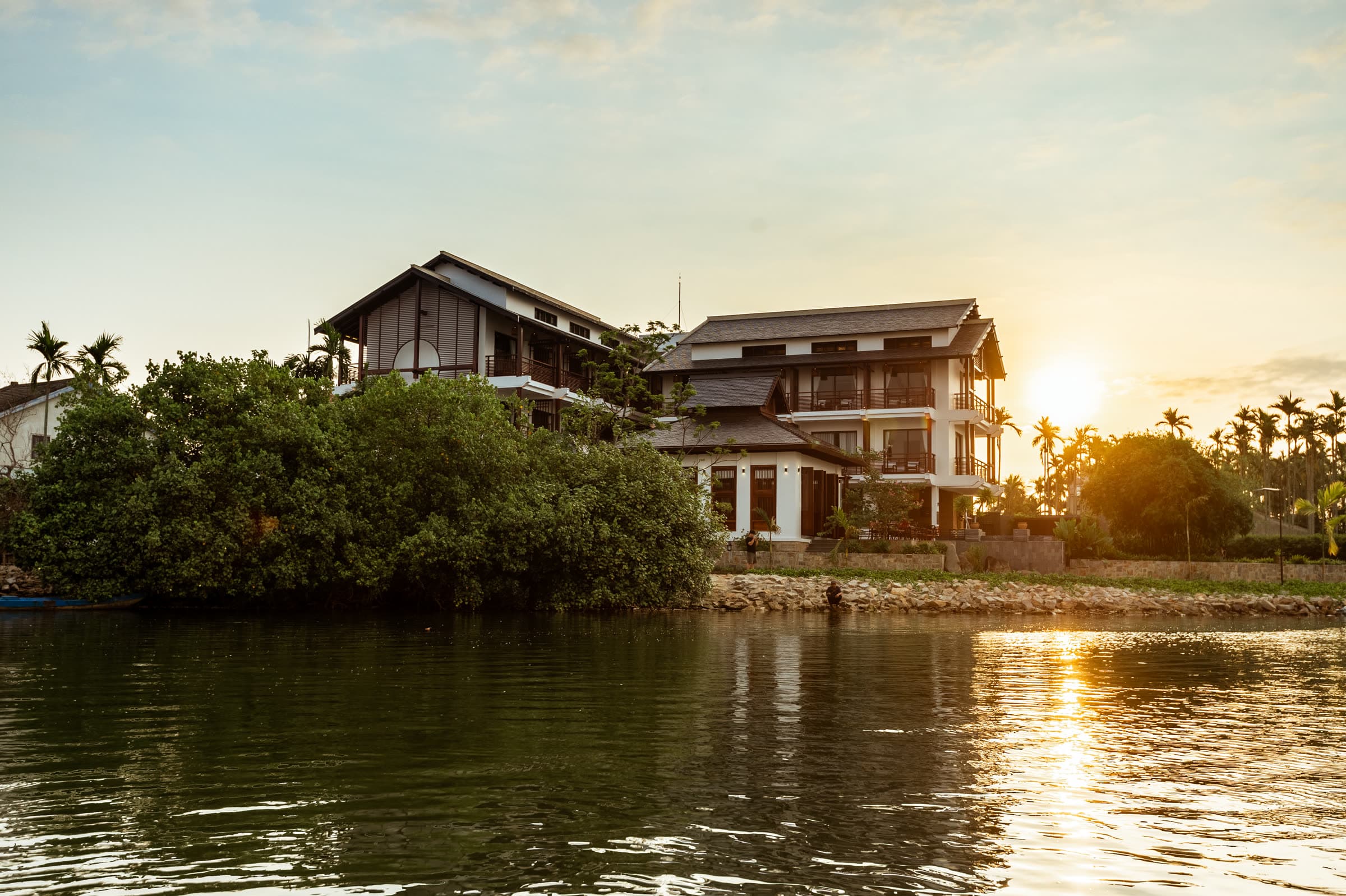
A 15th–19th-century trading port on the south bank of the Thu Bồn River, UNESCO-inscribed in 1999, and — bias acknowledged — where this hotel is. Hội An's appeal is that it's small. The Old Town is walkable in an hour; the surrounding islands (Cẩm Nam, Cẩm Kim, Cẩm Thanh) are short bridge-crossings away. We wrote a guide to the three quiet islands south of Old Town for travellers who want to stay outside the lantern-density.
How long: 3 nights minimum. Most travellers wish they'd booked 4 or 5. The quality of a Hội An visit scales with how much time you have to do nothing.
How to get there: 30 minutes by car from Đà Nẵng airport. Train continues from Đà Nẵng south after the transfer.
6. Quy Nhơn — Bình Định province
A coastal city about 300 km south of Đà Nẵng with long beaches, fewer tourists, and several Cham temple sites (Bánh Ít, Tháp Đôi). Smaller scale than Đà Nẵng or Hội An, fewer international hotels, less English-speaking infrastructure — and that is the appeal for some travellers.
Planning a trip around this? See dates at our quiet riverside hotel on the Thu Bồn. Check availability →
How long: 2 nights, mostly for the beaches and to break a long stretch.
How to get there: domestic flight from Hanoi or Saigon; train (the Reunification Express stops at Diêu Trì station, 12 km out of town).
7. Đà Lạt — the highlands
A French-built hill station on the Langbian Plateau, at 1,500 m elevation, with year-round temperatures of 14–23°C — the only place in southern Vietnam that needs a sweater in the evening. Coffee plantations, flower farms, pine forests, and a different culinary register entirely (artichoke tea, strawberry farms, hot pots).
How long: 2 nights. The market, a coffee farm, a waterfall hike, and the cool weather.
How to get there: domestic flight from Saigon (45 minutes) or Hanoi (1h 50m); 4–5-hour drive from Mui Né.
8. Mui Né — sand dunes and fishing village
Roughly 220 km from Saigon — about 5 hours by road. White and red sand dunes, a fishing village, kitesurfing in the November–April season, and an extremely dry microclimate. Quieter than the central beaches, hotter and less green than Đà Lạt.
How long: 1–2 nights, often as a stop on the way to or from Đà Lạt.
How to get there: bus or private car from Saigon; the Phan Thiết train branches off the main line.
A 14-day overland route
For travellers who want to do this properly: Hanoi (3) → Ninh Bình (1) → overnight train → Phong Nha (2) → Huế (2) → Đà Nẵng/Hội An (3) → flight → Đà Lạt (2) → Saigon (1). Fourteen nights, roughly 1,500 km of overland travel, the rhythm Vietnam was actually built around.
For travellers with 10 days, drop Phong Nha and Đà Lạt; for 7 days, drop everything except one anchor. Read our 10-day first-timer's itinerary for the compressed version, and our region-by-region calendar for which months work in which direction.
Open-jaw flights
Almost every international airline serving Vietnam offers open-jaw routings (in to Hanoi, out of Saigon, or vice versa). They're typically the same price as a return into one city plus a domestic one-way, and sometimes cheaper. Booking that way means you don't have to backtrack — which on a north-to-south journey saves a full travel day. Confirm visa eligibility before locking the route; Vietnam's e-visa allows multiple entries but most travellers on open-jaw routes are doing single-entry, which is fine.
A note on direction
Most itineraries go north-to-south because flights into Hanoi are cheaper from Europe. South-to-north works just as well — and arrives in Hanoi at the end, when you're slow enough to walk it properly. The countryside between is what justifies the trip. We'd rather have travellers arrive at our riverside hotel in Hội An on day 6 of an overland journey, having earned the river, than fly in from the airport on day 2 still wearing the smell of the plane. The country is its own reward; the stops between are the country.
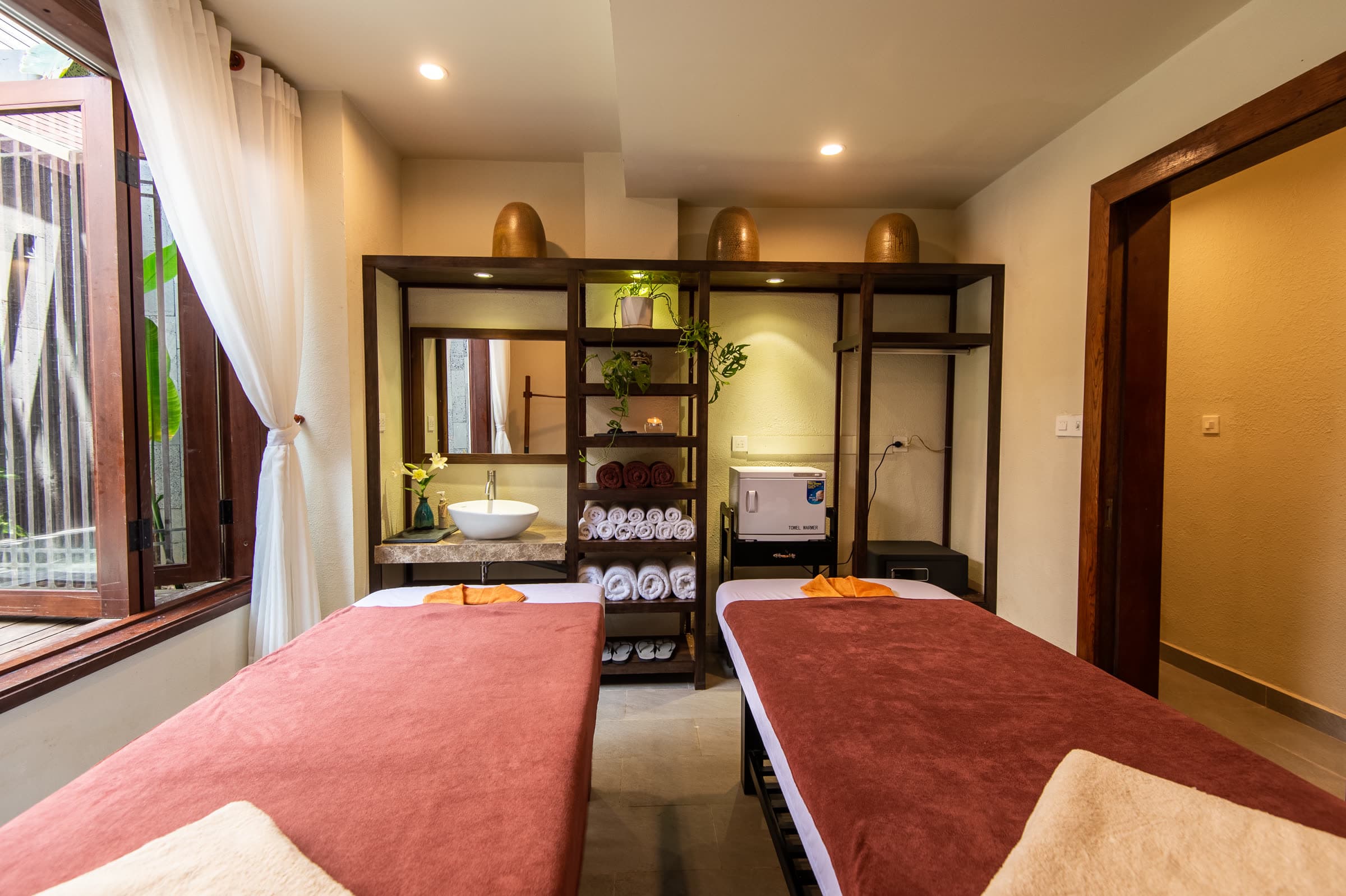
Every room at Nghê Prana is designed around the science of sleep. Blackout curtains, nightly aromatherapy turndown, and riverside quiet — experience what real rest feels like.
Riverside hotel rooms on the Thu Bồn, ten minutes by bicycle from the Ancient Town. Whether it's one night between Hue and Da Nang or a full week of doing nothing — we kept your room quiet.
Free cancellation · Direct from the family who built the hotel

 WhatsApp
 Zalo
Zalo