Where to stay in Hội An depends on what you came for. Old Town suits 1-2 night sightseeing trips. An Bàng beach suits longer relaxed stays. Cẩm Châu suits cyclists and digital nomads. Cẩm An suits a quiet beach-adjacent base. Cẩm Nam on the south bank suits travellers who want river quiet without losing access to the centre.
Hội An looks small on the map — about 6 km end to end. But the lived character changes neighbourhood to neighbourhood in ways that determine whether your trip feels relaxing or scattered. Below: an honest neighbourhood-by-neighbourhood read, with the trade-offs each one asks you to accept.
We''ll cover the five neighbourhoods most travellers actually choose between: Old Town (Minh An), An Bàng beach (Cẩm An), Cẩm An quiet zone, Cẩm Châu, and Cẩm Nam on the south bank of the Thu Bồn River. We won''t name competitor hotels or quote competitor prices — Booking.com filtered by neighbourhood will tell you that in two minutes. We''ll tell you the character each neighbourhood actually delivers.
1. Old Town (Minh An Ward) — for first-time, short-trip sightseers
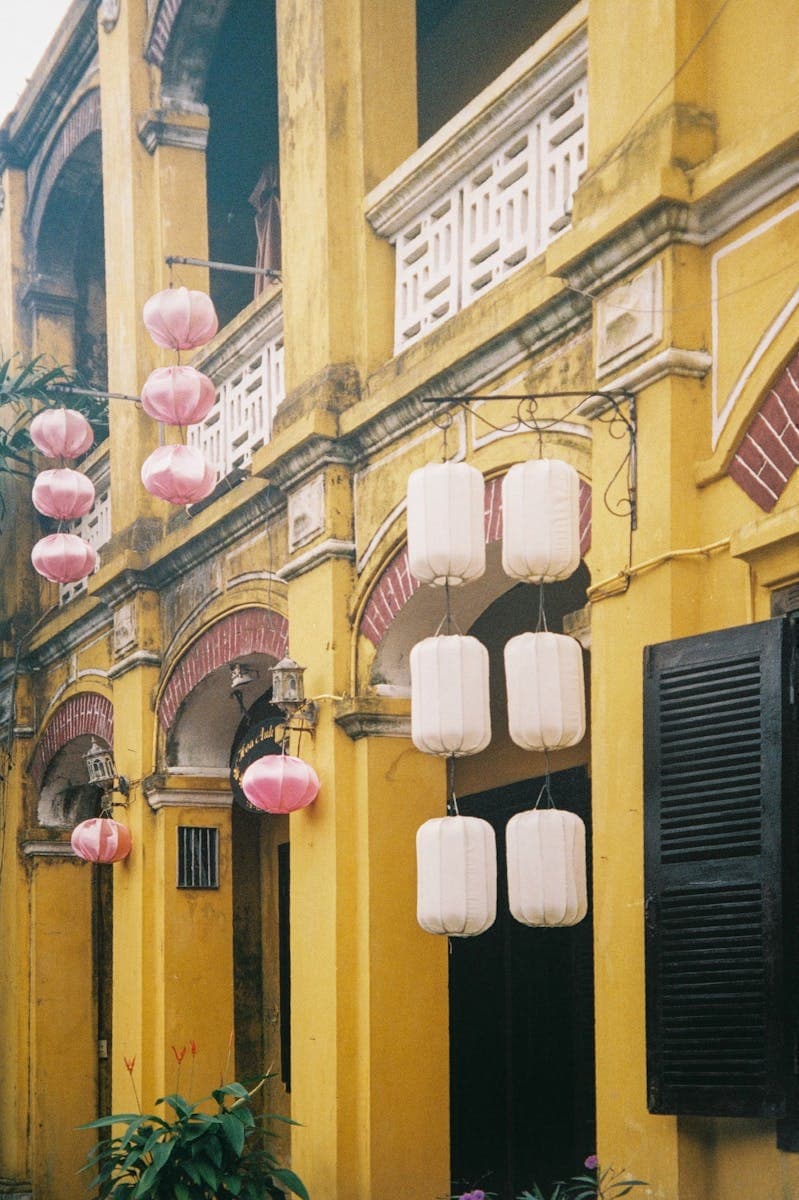
What it is: The UNESCO-protected pedestrian heritage zone — Trần Phú, Nguyễn Thái Học, Bạch Đằng — plus a thin ring of small streets just outside the walking-only core. Yellow walls, tile roofs, the Japanese Bridge, the night lanterns, the river.
Best for: First-time visitors on a 1-3 night trip. Travellers whose priority is "wake up, walk to coffee, walk to lanterns, walk home." Anyone who hates relying on transport.
The honest trade-offs:
Crowds run from late morning to ~10:30 pm. Tour groups peak 4-9 pm. Sunday is the worst.
Night noise. Old Town is alive every single evening — bars on Nguyễn Phúc Chu (the An Hội riverside pub strip), river-bank performers, music from An Hội bridge. If you sleep light, you''ll feel it.
No vehicle access during pedestrian hours. Practical effect: your taxi drops you 200-400 m from the door, you walk the last bit with luggage. Fine in good weather, tedious in October-November rain.
Pricing skews higher per square metre simply because the building footprint is small and heritage-protected.
Pick this if: you''re here for the architecture and the night lights, and you''ll only stay one or two nights. See our walking-distance hotel guide to the Japanese Bridge for distance honest-reads inside this zone.
2. An Bàng Beach (within Cẩm An Ward) — for slow stays and beach mornings
What it is: A beach village 4-5 km north-east of Old Town. Low-rise, sandy lanes, no large resorts on the actual beach strip. Centre of Hội An''s expat and digital-nomad community. The aesthetic is "village chic" — leafy, casual, slightly bohemian.
Best for: 4+ night stays. Couples on a relaxed honeymoon. Travellers who want the beach in their daily rhythm rather than as a day trip. Anyone who finds Old Town suffocating after dark.
The honest trade-offs:
Old Town is a 12-15 minute drive away. Not far, but every Old Town evening costs you a taxi or shuttle each way.
The beach erodes seasonally — winter (October-March) storms strip it badly. Summer beach is full and beautiful; winter beach is patchy.
Limited "real Hội An" feel. An Bàng is its own thing — wonderful, but it''s a beach village, not a heritage town.
Walkability is local-scale only. You can walk to your café, your beach bar, your dinner spot. You cannot walk to a museum.
Pick this if: you''re staying 4+ nights and your trip is more about decompression than sightseeing. Our An Bàng beach complete guide goes deeper on the beach itself.
3. Cẩm An (the quieter beach zone) — for couples who want beach access without the bar scene
What it is: The ward that contains An Bàng beach, but the inland parts of Cẩm An — between the beach road and Cẩm Châu — are a different animal entirely. Walled mid-size hotels, quiet residential lanes, sandy soil, mature trees.
Best for: Couples and families who want beach access (5-10 minutes by bicycle) but not the An Bàng bar-and-music rhythm. Slightly older traveller skew.
The honest trade-offs:
Less walkable than An Bàng village proper. You need a bicycle or scooter to live well here.
Restaurant choice in the immediate area is thinner. Most guests eat at their hotel or cycle to An Bàng.
It can feel quiet to the point of remote if you''ve come for atmosphere.
Pick this if: you''re a couple in your 40s+, you want the beach and the pool and dinner-in, and you don''t want to hear other people''s playlists from your terrace.
4. Cẩm Châu — for cyclists, digital nomads, and longer-term stays
What it is: The agricultural ward between Old Town and the beach, full of rice paddies, vegetable farms, small canals, and a growing cluster of villa-style stays and co-working cafés (the famed Trà Quế herb village lies just to the north, in neighbouring Cẩm Hà).
Best for: Stays of a week or more. Remote workers. Travellers who want to cycle through rice fields each morning and reach both Old Town (10-15 min cycle) and An Bàng (12-18 min cycle) on their own.
The honest trade-offs:
You need a bike, period. Without one, Cẩm Châu is just inconvenient.
No real "neighbourhood centre." Restaurants and cafés are spread thinly along the main roads (Lý Thường Kiệt, Trần Nhân Tông).
Rural in feel. A virtue if that''s what you want, a frustration if it isn''t.
Pick this if: you''re settling in for a week or two, you can ride a bicycle, and you''d rather wake up to rice fields than to scooter noise. See remote work in Hội An — the 90-day e-visa guide if that''s your trip.
5. Cẩm Nam — the south bank, river-quiet but central
What it is: The triangular ward on the south bank of the Thu Bồn River, opposite Old Town. Its road link to the Old Town is the short Cẩm Nam bridge (off Nguyễn Tri Phương), which lands you on the Bạch Đằng quay. A residential island of family homes, small farms, fish-and-rice-paper food vendors, and a small cluster of riverside hotels.
Best for: Travellers who want river-front quiet without sacrificing a 10-minute walk or cycle into Old Town. Light sleepers. Anyone who values evening river light over evening street life.
The honest trade-offs:
Smaller density of restaurants and cafés. What''s here is good (Cẩm Nam is famous for hến xào — stir-fried river clams) but choice is narrower than Old Town.
No beach. Beach is 6-7 km away — 15-20 min by scooter.
Floods in October-November. Cẩm Nam is low-lying and the Thu Bồn rises every season. Check the Hội An flood zones map and the hotel noise map before booking in monsoon months.
Flood-conscious October-November traveller: Old Town high-ground hotels or Cẩm Châu inland; avoid riverfront Cẩm Nam without checking elevation.
Where Nghê Prana Sits
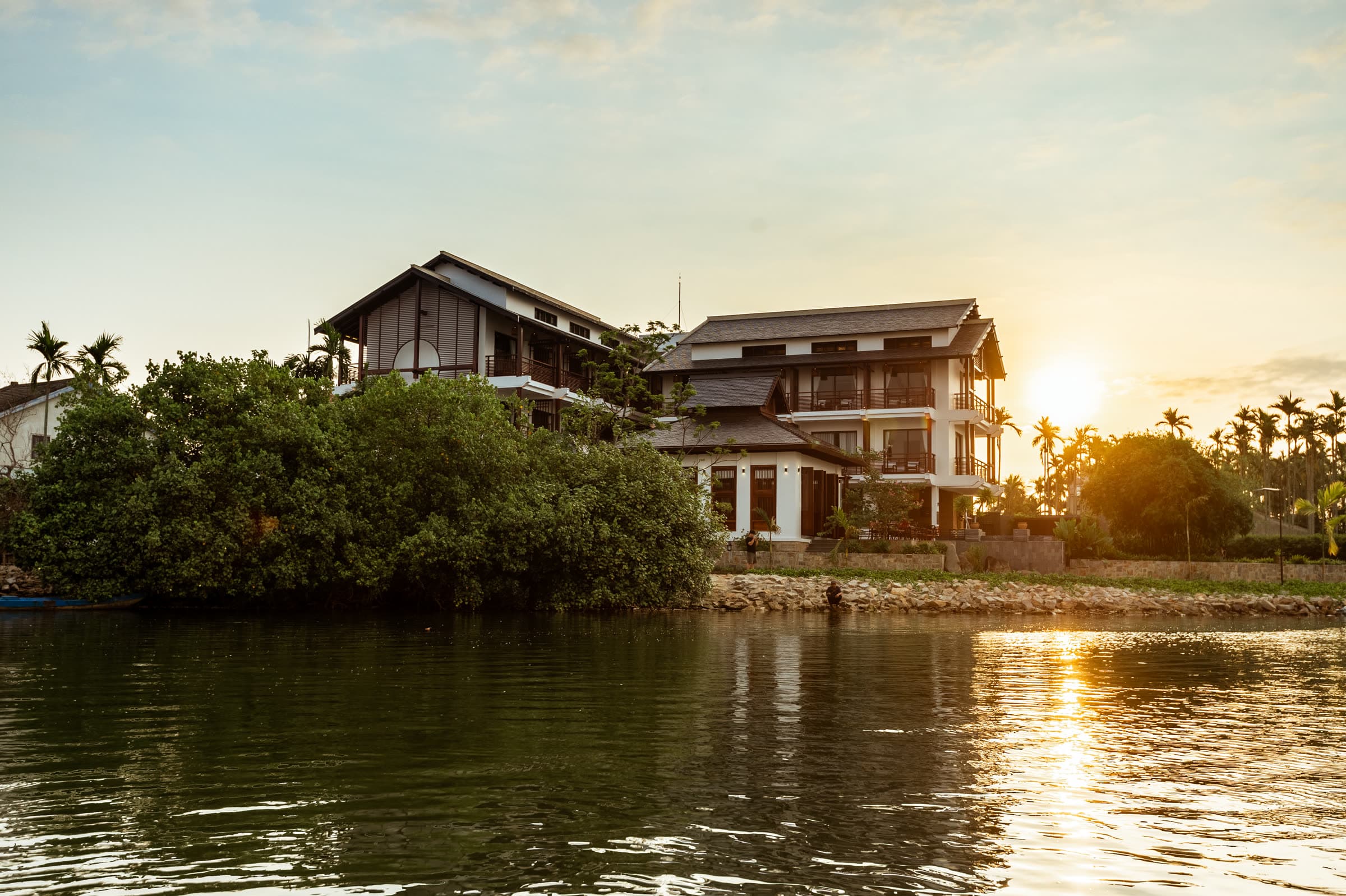
We''re in Cẩm Nam — on the island's south shore at its quiet east end, facing the main channel of the Thu Bồn, 3.2 km from the Old Town: about ten minutes by bicycle (bicycles come with every room) or six minutes by car. The trade we made when we built here: river view, river quiet, real night sky in exchange for one extra bridge between you and the lanterns.
For most guests that''s the right trade. You can walk to dinner in Old Town and walk back to silence. You can sit on the river bank at dawn before the day boats start. You can sleep through the night.
If you''re weighing neighbourhoods, our practical follow-ups: rooms and rates, dining, wellness programme, and the broader FAQ. And if you''re still mid-decision, the Thu Bồn River story explains the river that defines the south bank''s rhythm — and why Cẩm Nam exists at all.
The neighbourhood you pick is the texture of your trip. Pick by trip type, not by hotel star rating — the rating is just the wrapper.
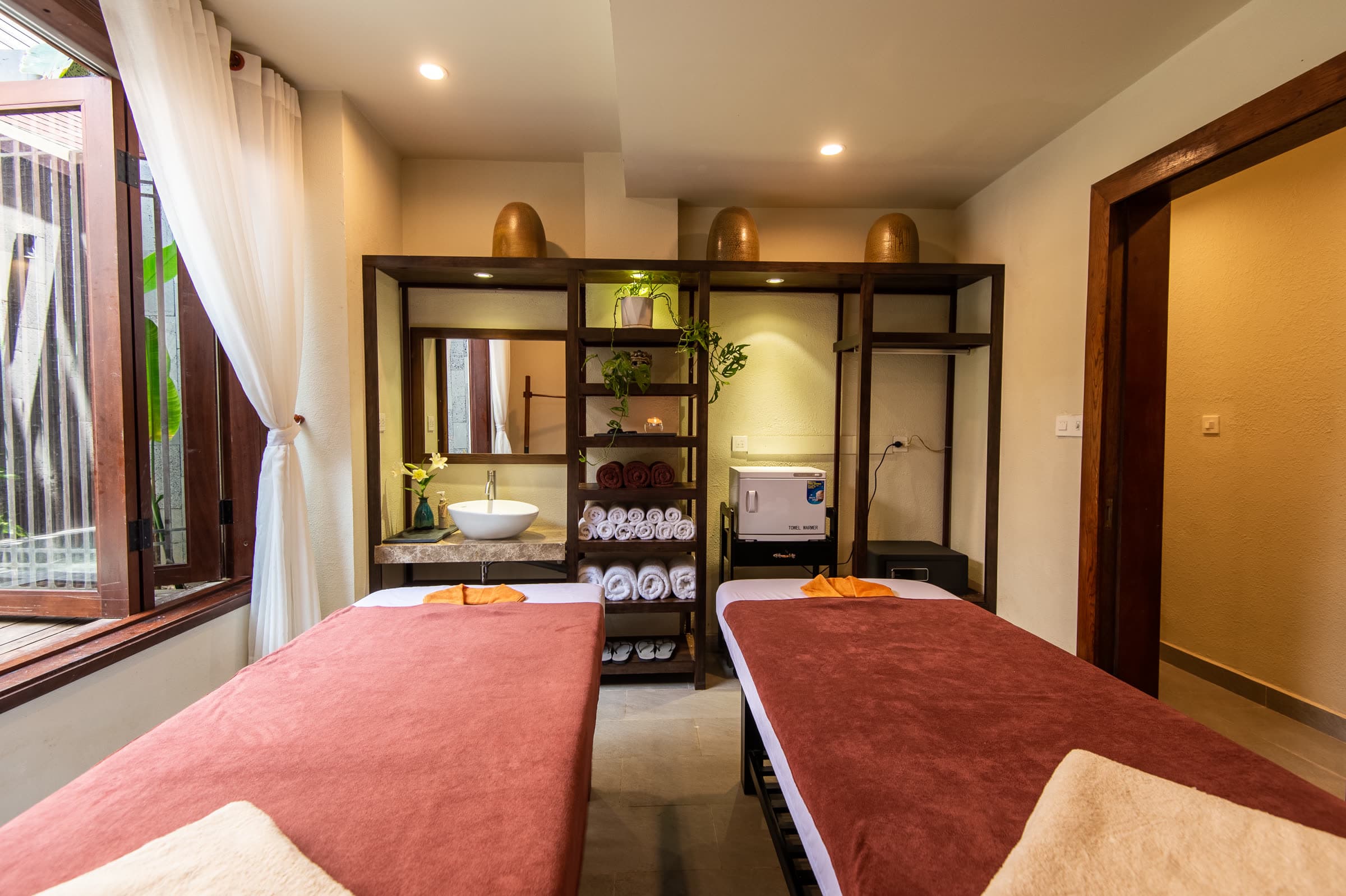
Every room at Nghê Prana is designed around the science of sleep. Blackout curtains, nightly aromatherapy turndown, and riverside quiet — experience what real rest feels like.
Riverside hotel rooms on the Thu Bồn, ten minutes by bicycle from the Ancient Town. Whether it's one night between Hue and Da Nang or a full week of doing nothing — we kept your room quiet.
Free cancellation · Direct from the family who built the hotel

 WhatsApp
 Zalo
Zalo