How Hội An Actually Works — The Family-Network Economy (And Why Your Hotel's Tailor Recommendation Is Better Than TripAdvisor)
Hội An's family-network economy is a 600-year-old trust system. Why a hotel's tailor recommendation has more skin-in-the-game than an anonymous review.
Hội An runs on relational trust. For roughly six centuries this small bend in the Thu Bồn River has been a working trading port — Cham, Vietnamese, Japanese, Chinese, Portuguese, Dutch, French — and the way commerce gets done here today is the descendant of how it got done then. Hotels recommend tailors, tailors recommend cooking classes, cooking classes recommend basket-boat boatmen, and the whole thing knits together into a network where reputation is currency and your hotel's word carries real weight. If you understand how the network works, you get treated as family-of-family. If you fight it, you spend the trip exhausted.
This post is the cultural translation. Not a warning. Not a "what to watch out for." A working explanation of why the place runs the way it runs, and how to participate well so you have the trip that the network is set up to deliver.
Six hundred years of trading-port logic
The relational structure of Hội An commerce isn't recent. It is the residue of an exceptionally long mercantile history.
Hội An's roots reach back to a Cham Kingdom trading port called Lâm Ấp Phố, active from around the 2nd century CE as a stop on the maritime Silk Road. Under the Nguyễn lords from the late 1500s, the town — known to Japanese and European traders as Faifo — became one of Southeast Asia's most active international ports. Japanese merchants arrived in such numbers in the late 1500s and early 1600s that they built their own neighbourhood, the Japanese merchant quarter, with hundreds of families and the famous Japanese Covered Bridge constructed in the 1590s. Chinese traders settled the parallel quarter. Dutch and Portuguese ships called regularly. The town was inscribed by UNESCO in 1999 as an exceptionally well-preserved trading port active from the 15th to 19th centuries.
When you trade with people from many languages and many home countries, paper contracts are slow and courts are slower. Trust networks scale faster than legal systems. A merchant's standing was vouched for by his neighbours, his clan, his guild house — and breaking that standing meant being shut out of the entire network, not just one deal.
That mercantile architecture is still here. The bones of the Old Town are literally those guild houses, those clan halls, those covered bridges. The social grammar that built them is also still here. It is how the town does business in 2026.
What the network looks like today
A typical Hội An family doesn't do one thing. They do five.
A grandmother runs a small shop on a side street
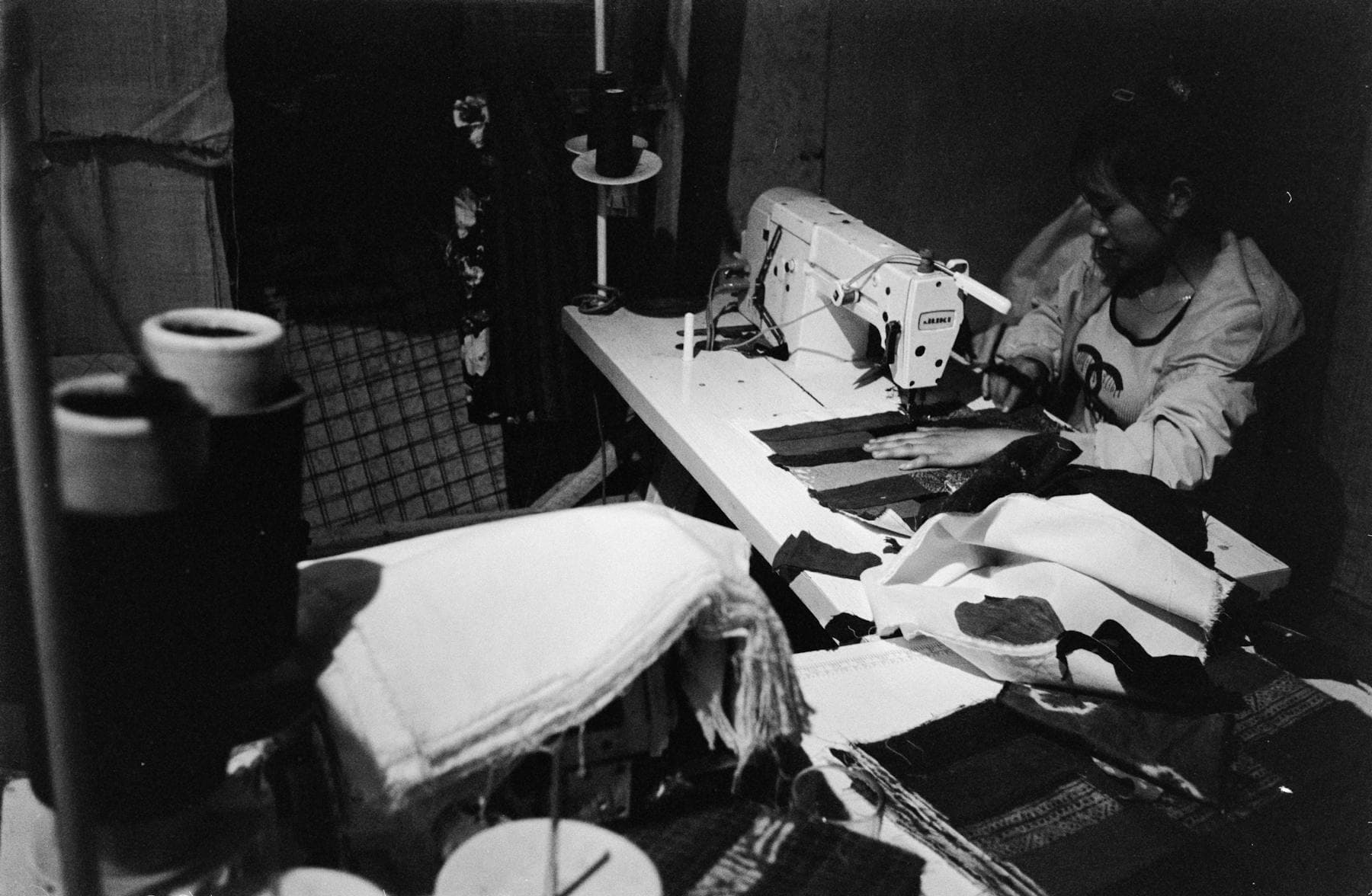
A daughter has a tailor stall in the central market
A son drives a taxi or runs a bike rental
A nephew runs cooking classes from the family courtyard
A cousin owns a homestay or works the front desk of a hotel
Inside the family, work flows along blood and marriage. Across families, it flows along long-running relationships — the tailor your hotel sends you to has been delivering for that hotel for ten years, sometimes thirty. The hotel doesn't recommend a stranger. The hotel recommends someone whose mother knew the hotel owner's mother.
This is the family-network economy. It is how a town of roughly one hundred thousand residents has absorbed five million visitors a year (pre-2020) without becoming a faceless tourist machine. The network is the immune system that keeps the town from being eaten by the volume.
Why this is good for the guest
Western readers sometimes hear "the hotel sent me to their tailor" and assume a problem. The reverse is closer to the truth. Skin-in-the-game accountability is the single best consumer protection a small town can offer, and the family network creates more of it than any review platform.
Consider what's at stake on each side of a recommendation:
A TripAdvisor reviewer writes one review for one tailor and never sees you again. If the tailor disappoints you, the reviewer pays no cost. If the tailor delights you, the reviewer gets nothing. The incentive structure rewards effortful complaint and rewards drive-by praise. It does not reward sustained accountability.
Your Hội An hotel sees you for three to five days. Whatever you experience at that tailor will be discussed at breakfast tomorrow. The hotel's standing in town depends on the tailor delivering. The tailor knows that. The tailor's standing in town depends on the hotel continuing to recommend. The hotel knows that. The recommendation has skin on every side.
The structural result: when a Hội An hotel recommends a tailor, the tailor will treat you as family-of-family. Measurements taken carefully. Fittings scheduled around your other plans. A second adjustment included if the first doesn't sit right. Not because you're a special guest, but because the relationship between the hotel and the tailor is older than your trip and will outlast it.
How to participate well
The travel writing genre often advises tourists to "ask three different sources" or "do your own research." In Hội An that advice produces worse outcomes than simply trusting your hotel. A few practical notes:
Ask your hotel for one tailor, one cooking class, one boat ride, one good local restaurant. One. The network has a depth chart for every category and your hotel knows it. Asking for one is asking for the strongest match.
If the first match doesn't fit, ask for a different angle, not a different network. "I love the fabric here but the cut isn't quite my style — is there someone better for a softer drape?" A good front desk has the next option in the same network and will route you accordingly.
Planning a trip around this? See dates at our quiet riverside hotel on the Thu Bồn. Check availability →
Pay attention to time, not just price. A tailor who needs three fittings to get a suit right is not slower; she is more careful. Plan your Hội An days backwards from your fitting schedule, not forwards from your sightseeing list.
Don't compare to home pricing in your head. Hội An tailoring exists at a price point that no Western market sustains. The relevant comparison is whether this tailor is doing better work than that tailor in the same town, not whether a bespoke jacket "should" cost more.
Where the money goes
One of the quieter virtues of the family network is circulation. Money you spend at a recommended operator stays inside Hội An. The operator pays cousins, suppliers, the vegetable lady at the market, the moto-bike repair shop, the rice farmer in Cẩm Kim. A booking made through an offshore aggregator sends roughly 15–20% of the room rate to a different country before the hotel sees a cent.
For travellers who care that their tourism dollars actually reach the place they visited, the family network is the most efficient delivery mechanism the town has ever built. It is older than any platform and it routes around all of them.
We are a riverside hotel on the south bank of the Thu Bồn River, in Cẩm Nam, a quiet residential ward across the river from the Old Town. Our family has lived in this part of Hội An for generations, and our front-of-house team is from here. The network we tap into when guests ask for recommendations is the one we ourselves use.
A few principles we hold:
Recommendations are given on request, once. No pamphlets in the room. No upsell at check-in. If you want to discover the town on your own, you will hear nothing from us. If you want a tailor or a cooking class, ask, and we will name one.
The list is short. We don't aggregate. We send guests to the operators we ourselves go to.
No commission targets. A receptionist's job is to read what the guest actually wants and route accordingly. A guest who wants a quiet evening at the room with the river outside the window is served exactly that — not a sunset cruise add-on.
Our differentiation isn't that we have access to a special network. Every good Hội An hotel does. Our differentiation is that we are on the quiet south bank in Cẩm Nam, with the Thu Bồn between us and the Old Town's nightlife, and that the structural quietness of the location lets the network's recommendations land in a guest who actually slept the night before.
A 600-year town reads visitors generously
Hội An has been hosting strangers since before Yelp, before the European Enlightenment, before the Vietnamese language used Latin script. The town has a deep, embodied skill for receiving foreigners well. The family network is the modern shape of that skill.
The most relaxing trip a visitor can have here begins with handing over a small piece of decision-making to the hotel that has been doing it for fifty years. Not because the visitor is helpless. Because the network's matches are better than the visitor's research, and because freeing up that mental load lets the actual travel — slow mornings, river light, the particular Hội An rhythm — happen.
Trust the recommendation. It comes from longer than you've been alive.
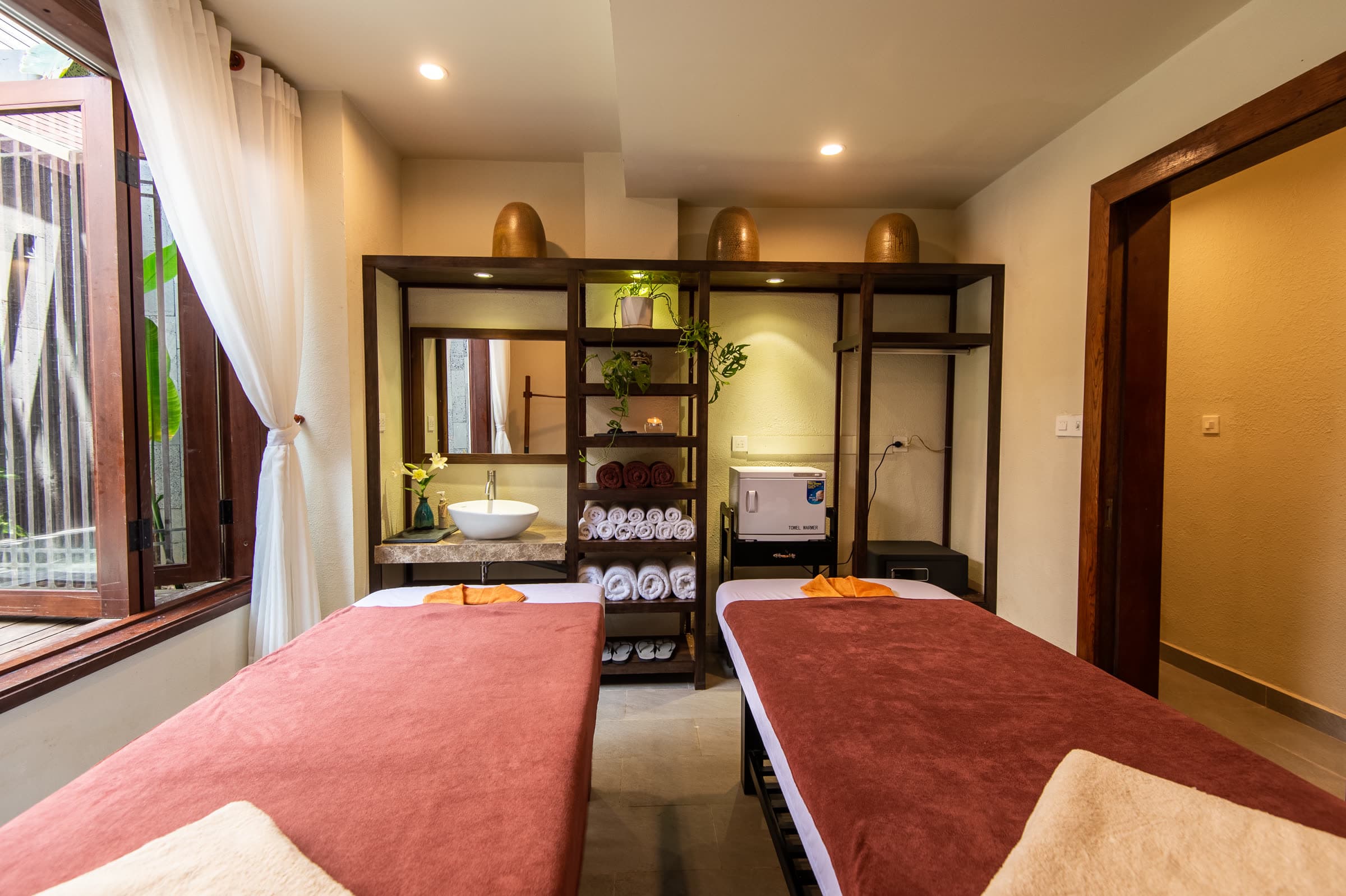
Every room at Nghê Prana is designed around the science of sleep. Blackout curtains, nightly aromatherapy turndown, and riverside quiet — experience what real rest feels like.
Riverside hotel rooms on the Thu Bồn, ten minutes by bicycle from the Ancient Town. Whether it's one night between Hue and Da Nang or a full week of doing nothing — we kept your room quiet.
Free cancellation · Direct from the family who built the hotel


 WhatsApp
 Zalo
Zalo