Phật Đản 2026 — Vietnam''s Mahayana Buddhist observance of the Buddha''s birth — peaks on Sunday 31 May 2026, the 15th day of the 4th lunar month, with quiet ceremonies running daily at Hội An''s pagodas through the preceding two weeks. This is a religious observance, not a tourist event; the guidance below is for visitors who want to witness it respectfully rather than treat it as a spectacle.
The framework for what is happening at Hội An's pagodas this weekend is set by a single document: Thông bạch số 87/TB-HĐTS of the Hội đồng Trị sự — the Standing Committee of the Giáo hội Phật giáo Việt Nam — published 21 April 2026 by Giác Ngộ Online and circulated by Báo VietnamPlus (TTXVN). It defines Tuần lễ Phật đản (17–31 May), instructs every tự viện to ring the chuông Bồ Đề three times at 04:00 on lunar 15/4, and explicitly couples Phật đản 2570 with the 45-year founding of the Sangha. In Hội An, that directive maps onto Tổ đình Chúc Thánh — the tổ đình of thiền phái Lâm Tế Chúc Thánh whose founder Minh Hải has been the subject of scholarly bulletins by Đào Vĩnh Hợp and Võ Thị Ánh Tuyết in Tạp chí Văn hóa Phật giáo, and whose memorial rites are documented annually by Phật giáo Quảng Nam. See the References below for the full set, including Báo Nhân Dân's photo essay on the 2025 hoa đăng night for visual context.
If you arrived in Hội An this weekend (29–31 May 2026) without knowing what was happening at the pagodas — this guide is the answer. For the deeper background on the lineage, the Buddhist Council''s 2026 theme, and the doctrinal context, see our foundation piece from 13 May. What follows is the practical "what is happening this weekend" reference.
When exactly is Vesak 2026 in Hội An
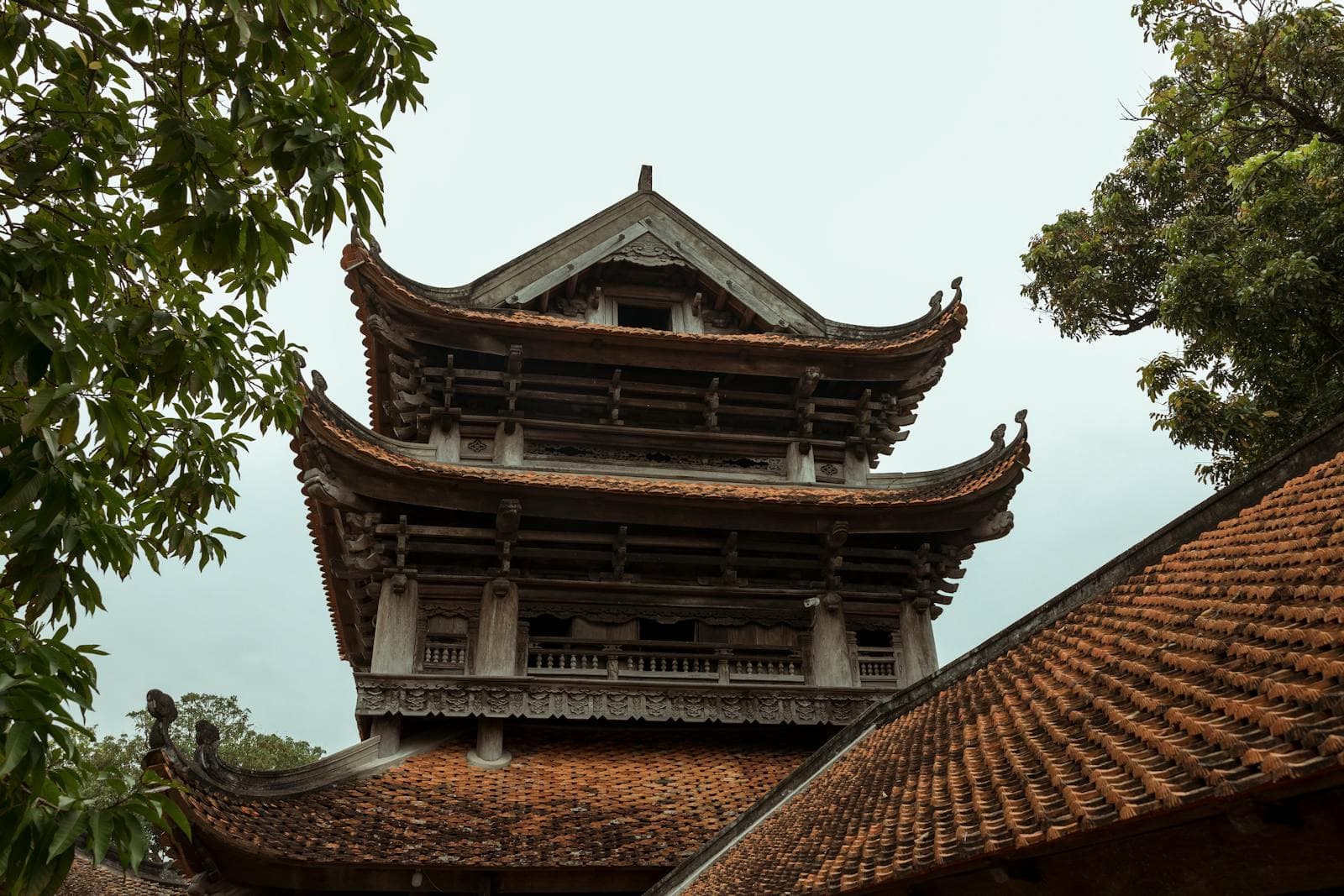
Photo: Duy Kien Dao / Pexels
In Vietnamese Mahayana Buddhism, Phật Đản is held on the 15th day of the 4th lunar month, which in 2026 falls on Sunday 31 May in the Gregorian calendar (timeanddate.com: Vesak 2026 in Vietnam). The Vietnam Buddhist Sangha''s 2026 guidance frames the observance as Phật lịch 2570 — Buddhist year 2570 — and treats the period from lunar 1/4 to lunar 15/4 (approximately 17–31 May 2026) as the official "Tuần lễ Phật Đản" or Buddha''s Birthday week, with the official ceremony on lunar 15/4 (Vietnam Buddhist Sangha 2026 Guidelines via vietnam.vn).
The reason Vietnamese pagodas mark the 15th rather than the 8th of the lunar month comes from the East Asian Mahayana tradition: while some Mahayana traditions historically celebrated Buddha''s birth on lunar 8/4, the Vietnamese Sangha aligned with the full-moon date used by the UN-recognised international observance and by most South and Southeast Asian Buddhists (Wikipedia: Buddhist calendar; Britannica: Vesak). Theravada Buddhism — the dominant tradition in Thailand, Sri Lanka, Myanmar — observes Vesak on the full moon of the lunar month of Vaiśākha, commemorating the Buddha''s birth, enlightenment, and parinibbāna (passing) as a single combined event. Vietnamese Mahayana commemorates the birth alone on lunar 15/4, with enlightenment (lunar 8/12) and parinirvāṇa (lunar 15/2) kept as separate observances.
One thing worth setting straight up front: Phật Đản is not a national public holiday in Vietnam in 2026. The official 2026 holiday schedule lists eleven paid days, none of which is Buddha''s Birthday (Vietnam Briefing: 2026 Vietnam Public Holiday Schedule; Wikipedia: Public holidays in Vietnam). Government offices and most businesses operate normally on 31 May. The observance is religious and is held inside pagodas and Buddhist Association halls, not in the streets, and there is no nationwide day off.
All four of the principal pagodas below are within roughly 1–4 km of the Old Town, walkable or by bicycle. Ceremony times below are typical for Vesak week based on Vietnamese Buddhist practice; specific local times for 2026 are confirmed at the gate the morning of each ceremony — please ring or check noticeboards before assuming an exact start. Treat the time bands as orientation, not appointment.
Tổ đình Chúc Thánh — the lineage''s mother house
Chùa Chúc Thánh is the oldest pagoda in Hội An and the founding monastery of the Lâm Tế Chúc Thánh Zen lineage that dominates Buddhism throughout Quảng Nam and central Vietnam. It was founded around 1696–1697 by Zen Master Minh Hải Đắc Trí (also called Pháp Bảo), a Chinese monk from Quảng Đông (Guangdong) who came south during the southward expansion of the Nguyễn lords and remained in Hội An after his ordination delegation returned to China (Hội An Heritage Centre: Chùa Chúc Thánh; Giác Ngộ Online: Chùa Chúc Thánh). Master Minh Hải composed the transmission verse that still names monks across this lineage today. For Phật Đản, expect the largest local gathering of the week here on Sunday 31 May, typically built around morning sutra recitation, the tắm Phật ritual described below, and an evening hoa đăng (lantern release). Address: Tôn Đức Thắng, near Hùng Vương — about 2 km north-west of the Japanese Covered Bridge.
Chùa Phước Lâm — the abundant forest of blessings
Founded in the mid-18th century by Master Thiệt Dinh Chánh Hiển within the same Lâm Tế Chúc Thánh school, Chùa Phước Lâm sits a short walk from Chúc Thánh and is roughly 300 years old, with 14 generations of abbots and royal recognition from the Nguyễn court (VinWonders: Phước Lâm Pagoda). The pagoda''s layout follows the Chinese character 國 ("country") — main hall at centre, flanking halls front and rear, bell and drum towers to the sides. Phước Lâm typically holds a more contemplative Phật Đản programme than Chúc Thánh — meaning fewer crowds and a closer view of the rituals for visitors who arrive quietly.
Chùa Pháp Bảo — the Buddhist Association headquarters
Chùa Pháp Bảo is the largest pagoda inside the Old Town and serves as the headquarters of Hội An''s municipal Buddhist Association. It was built in 1936 as Tịnh Hội Pagoda (Pagoda of the Provincial Buddhist Association) and renamed in 1967 in honour of Master Minh Hải''s dharma name, Pháp Bảo (VinWonders: Phap Bao Pagoda). Because it is the Buddhist Association''s seat, the city-level Phật Đản ceremony — with senior monks, civic representatives, and the official reading of the Sangha''s Vesak message — is most likely to take place here on Sunday morning. Entry is free; the pagoda is normally open from around 07:00 to 18:00.
Tổ đình Vạn Đức — the quiet ancestral house in Cẩm Hà
About 4 km north of central Hội An in Đồng Nà hamlet, Cẩm Hà ward, Chùa Vạn Đức was founded in the late 17th century by Zen Master Minh Lượng (Nguyệt Ân) — also from Guangdong, also Lâm Tế Chúc Thánh lineage. It is recognised in the imperial gazetteer Đại Nam Nhất Thống Chí and was designated a national historical monument in 1991 (Hội An Heritage Centre: Chùa Vạn Đức; Wikipedia (Vietnamese): Chùa Vạn Đức). Vạn Đức is the quietest of the four. If you want to witness Vesak without crowds, this is the one.
The rituals you''ll see — and what they mean
Tắm Phật — bathing the Buddha
The central ritual of Phật Đản is tắm Phật: scented water is ladled gently over a small standing statue of the infant Buddha, who is depicted with one hand pointing to the sky and one to the earth. The image references the Lalitavistara''s account of the Buddha''s birth at Lumbini, in which the newborn took seven steps and was bathed by streams of pure water from heavenly nāga (Buddhistdoor: A Vesak Ritual — Bathing the Buddha; UN Day of Vesak 2019 Vietnam: Bathing of the Buddha Ritual). Doctrinally the act is read as washing one''s own greed, anger and delusion — not the statue. Visitors are usually welcome to take their turn after monastics and senior laity. Fold the palms (chắp tay), bow once, ladle three times — over the right shoulder, over the left shoulder, over the head — and step back.
Hoa đăng — the lantern release
On Vesak eve, many Vietnamese pagodas hold a hoa đăng ceremony: candle-lit paper lanterns are placed on the surface of a temple pond, lake, or river after a meditation circumambulation and chanted prayers (Vietnam.vn / Tuổi Trẻ: Night of lanterns at Vesak 2025; Báo Nhân Dân: Hoa đăng Vesak 2025). At the 2025 UN Day of Vesak event in Ho Chi Minh City, around 35,000 lanterns were lit. The candle stands for prajñā — wisdom — dispelling the dark of ignorance, and the release is a collective prayer for peace. This is a different event from Hội An''s monthly lantern festival on lunar 14, which is a heritage tradition organised by the city since 1998 (Hoi An Day Trip: Hoi An Lantern Festival) — the monthly festival is cultural and civic, the hoa đăng on Vesak eve is religious. They can fall close together but are distinct. See our moon calendar for which is which.
Chay — vegetarian observance
On lunar 1 and lunar 15 of every month, observant Vietnamese Buddhists eat chay — a vegetarian or vegan diet that excludes meat, fish, and traditionally the "five pungent spices" (onion, garlic, scallion, leek, chives) (Hanoi L&C Academy: Vegetarian culture in Vietnam). During Vesak week, this practice is observed by many laypeople throughout the full week from lunar 1 to lunar 15, not only on the two single days. You''ll notice "quán chay" signs proliferating around the pagodas and along Hùng Vương street. Restaurants near Chúc Thánh and Phước Lâm are particularly worth seeking out for the xôi chay and bún chay served during this week.
Bát Nhã Tâm Kinh — the Heart Sutra
If you sit through any morning service this week, the centrepiece chant you''ll hear is the Bát Nhã Tâm Kinh — the Heart Sutra. At roughly 260 Chinese characters it is the shortest and most-recited text in all of Mahayana Buddhism (Wikipedia: Heart Sutra). In Vietnamese pagodas it is recited in the Sino-Vietnamese (hán việt) register, beginning "Quán Tự Tại Bồ Tát hành thâm Bát-nhã ba-la-mật-đa…". The teaching is on emptiness — sắc tức thị không, không tức thị sắc ("form is emptiness, emptiness is form"). You are not expected to understand the words; standing quietly and listening is itself the participation.
The flag of Buddhism — six colours
You will see the five-stripe Buddhist flag hanging from pagoda gates and many house gates around Cẩm Phô, Cẩm Hà and Cẩm Nam this week. The flag was designed in Colombo in 1885 by a committee including the American journalist and Theosophist Henry Steel Olcott, and was first publicly hoisted on Vesak day, 28 May 1885 (Wikipedia: Buddhist flag; Buddhist Council of Queensland: The Origin and Meaning of the Buddhist Flag). Its six bands — blue, yellow, red, white, scarlet/orange, and a final compound stripe of all five — represent the colours of the aura said to have emanated from the Buddha at his enlightenment, and the unity of all Buddhists. The flag was adopted as the International Buddhist Flag at the 1950 World Fellowship of Buddhists. It is religious, not national — please don''t pose for influencer photographs draped in it.
How to participate respectfully as a visitor
Photo: HONG SON / Pexels
Dress: shoulders and knees covered. A light long-sleeve and a sarong/long skirt is the easiest combination. Linen breathes in late-May heat.
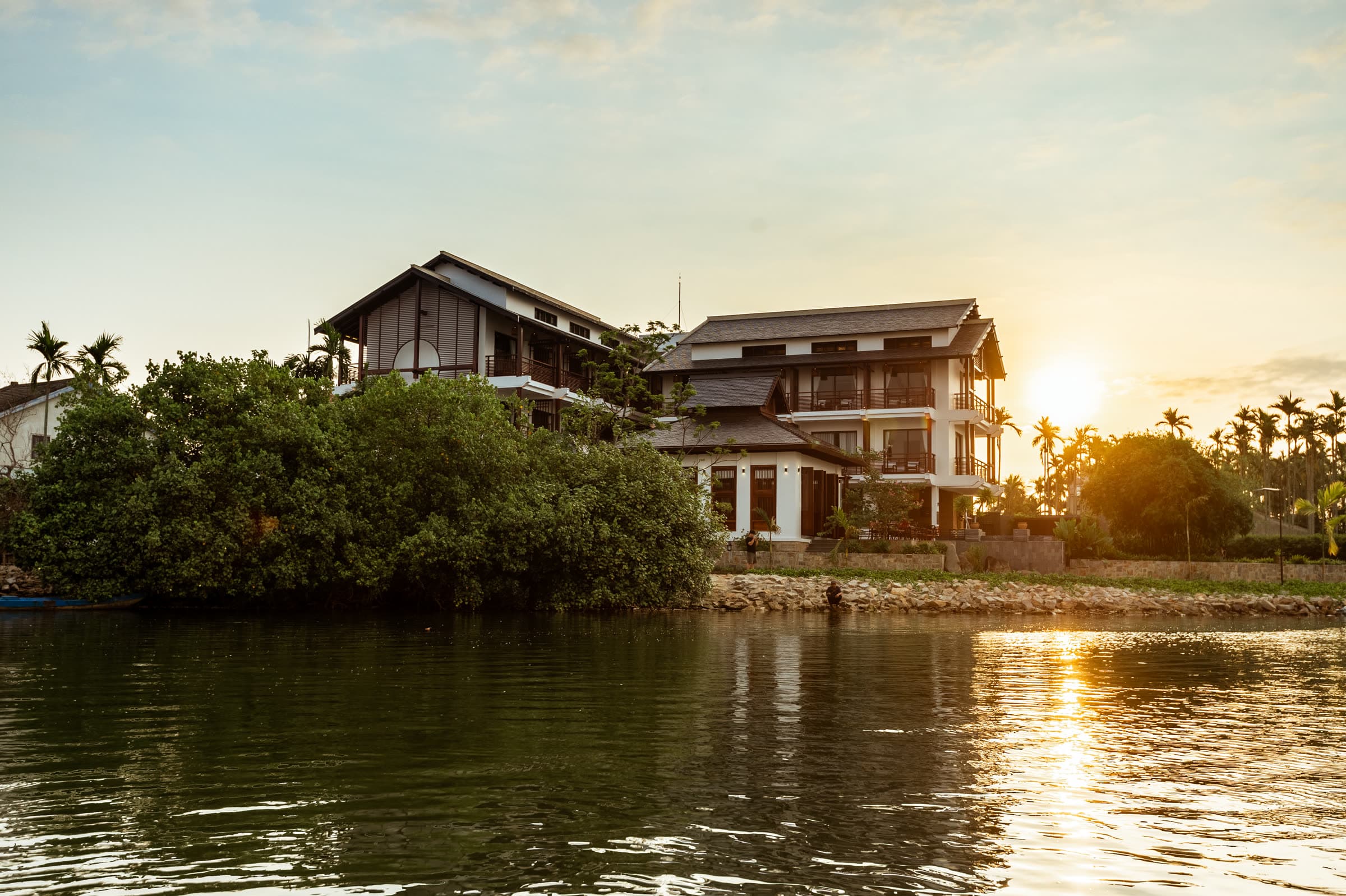
Planning a trip around this? See dates at our quiet riverside hotel on the Thu Bồn. Check availability →
Shoes: remove them before stepping into the main Buddha hall (chánh điện). Bare feet or thin socks. Shoes go on the rack outside, and walking from the rack onto stone or tile is the cue.
Photography: courtyards, gates, and exteriors are fine. Inside the main hall during recitation or tắm Phật, put the phone away. Never photograph facing the central altar; never use flash on a person in prayer. If unsure, watch what local laywomen are doing and copy them.
Phones: silent mode at the gate. Do not take a call inside the courtyard.
Cúng dường tùy hỷ ("offering as the heart moves you"): the hòm công đức — wooden donation box, usually near the main altar — is the right place for an offering. There is no fixed amount and no expectation. 20,000–50,000 VND is normal for a visitor; 100,000 is generous. No staff member will ask for a donation in person — that''s a tourist scam, not a temple practice. Drop notes in folded, don''t fan them.
Thanking a monk or nun: clasp the hands in front of the chest (chắp tay), bow slightly, and say "con cảm ơn thầy" (to a monk) or "con cảm ơn cô" (to a nun). The pronoun "con" — literally "child" — is the humility register Vietnamese Buddhists use with monastics. It is one of the warmest phrases a foreigner can say correctly.
Hand the lantern down, not up: at hoa đăng, lower your lantern onto the water — don''t throw or drop. The motion is the offering.
A 3-day Vesak-aware Hội An itinerary (Friday 29 — Sunday 31 May 2026)
Illustration: Nghe Prana editorial
Friday 29 May — settle in slow. Arrive, unpack at the riverside hotel on Cẩm Nam''s south bank, walk fifteen minutes to the Cẩm Nam coconut groves. Early evening, cross the foot bridge for an unhurried walk through the Old Town. Tea and a chay dinner. Sleep early; Sunday is a long day.
Saturday 30 May — the quieter day. Bike north along the river to Tổ đình Vạn Đức in Cẩm Hà mid-morning (about 4 km from us — 15 minutes by bike, 8 minutes by Grab car). This is the least-trafficked of the four pagodas and gives you a sense of the lineage''s atmosphere without the Sunday crowds. Lunch chay at a vegetarian house near Phước Lâm. Afternoon read or swim. Sunset at the Thu Bồn river — the sunset vantage points along Cẩm Nam''s embankment are at their best in the long late-May evenings.
Sunday 31 May — Phật Đản peak. Morning visit to Chùa Pháp Bảo for the city ceremony (typically 07:00–09:00; verify at the gate). Walk to Chùa Chúc Thánh for the lineage''s mother-house programme around 09:30–11:00. Long, slow lunch (vegetarian) back near the river. Late afternoon rest. Return to Chúc Thánh or your pagoda of choice for the hoa đăng lantern release in the early evening. The pagoda will tell you when to be back.
Practical from Nghê Prana
From our riverside hotel on the south bank of the Thu Bồn at Cẩm Nam, the rough distances are:
Chùa Pháp Bảo (Old Town): ~1.5 km — 6 min by Grab, 8 min by bike
Chùa Chúc Thánh: ~3 km — 8 min by Grab
Chùa Phước Lâm: ~3 km — 8 min by Grab (next door to Chúc Thánh)
Chùa Vạn Đức (Cẩm Hà): ~5 km — 12 min by Grab
Reception can arrange a Grab-car or a quiet driver for the morning ceremonies; please give us 30 minutes notice the evening before. Our restaurant is serving an expanded chay menu for Vesak week — bánh ướt chay, cao lầu chay (using local Cẩm Hà-grown vegetables), and xôi vò gấc — and we''re happy to prepare a vegetarian breakfast box to take to a 07:00 service if you''d like. A flask of strong phin coffee to follow is the local way to come back to the day. For the cultural context of why this week is observed quietly along the Thu Bồn, and where Vesak sits in Vietnam''s 12-month festival calendar, the linked pieces are starting points.
Looking ahead — Phật Đản 2027
For travel planners: Phật Đản 2027 falls on Thursday 20 May 2027 (lunar 15/4 of the Year of the Goat, Đinh Mùi). If you''re reading this and thinking next year''s trip — May is consistently the best month for this observance, with long evenings, warm but not yet monsoon weather, and lower-than-peak tourism numbers in Hội An before the European summer arrives.
Phật Đản is a small, internal observance held in pagodas and in laypeople''s homes — the lanterns and incense are not for visitors. If you visit a pagoda this weekend, you are a guest at a religious gathering. Behave accordingly, and you will be welcomed warmly.
About this article. This weekend-focused reference draws on the 2026 directive of the Giáo hội Phật giáo Việt Nam (Thông bạch 87/TB-HĐTS via Giác Ngộ Online and VietnamPlus), the Phật giáo Quảng Nam diocese's reporting on the Chúc Thánh lineage, and Đào Vĩnh Hợp & Võ Thị Ánh Tuyết's Tạp chí Văn hóa Phật giáo paper on Tổ đình Chúc Thánh's archaeological value. The hotel-side primary contribution is the on-the-ground Sunday 31 May schedule across Hội An's four working pagodas — Chúc Thánh, Phước Lâm, Pháp Bảo, Vạn Đức — with ceremony times measured locally.
Trung ương Giáo hội Phật giáo Việt Nam (2026). Thông bạch số 87/TB-HĐTS hướng dẫn tổ chức Đại lễ Phật đản Phật lịch 2570 — Dương lịch 2026. Giác Ngộ Online. View source
Ban Trị sự GHPGVN tỉnh Quảng Nam (2024). Hội An: Môn phái Chúc Thánh giỗ Tổ Minh Hải tại tổ đình Chúc Thánh. Phật giáo Quảng Nam (phatgiaoquangnam.com). View source
TS. Đào Vĩnh Hợp, ThS. Võ Thị Ánh Tuyết (2022). Tổ đình Chúc Thánh (Hội An — Quảng Nam) và giá trị tư liệu khảo cổ cần được bảo tồn, phát huy. Tạp chí Văn hóa Phật giáo. View source
Báo Nhân Dân (2025). Hoa đăng sáng lung linh mừng Đại lễ Vesak 2025. Báo Nhân Dân điện tử. View source
Báo Thanh Niên (2026). Đại lễ Phật đản 2026: Lịch thả hoa đăng ở chùa Pháp Hoa, chùa Diệu Pháp. Báo Thanh Niên. View source
Báo Thế giới & Việt Nam (Bộ Ngoại giao) (2026). Đại lễ Phật đản năm 2026: Giáo hội yêu cầu các tự viện chăm lo người yếu thế. Báo Quốc tế. View source
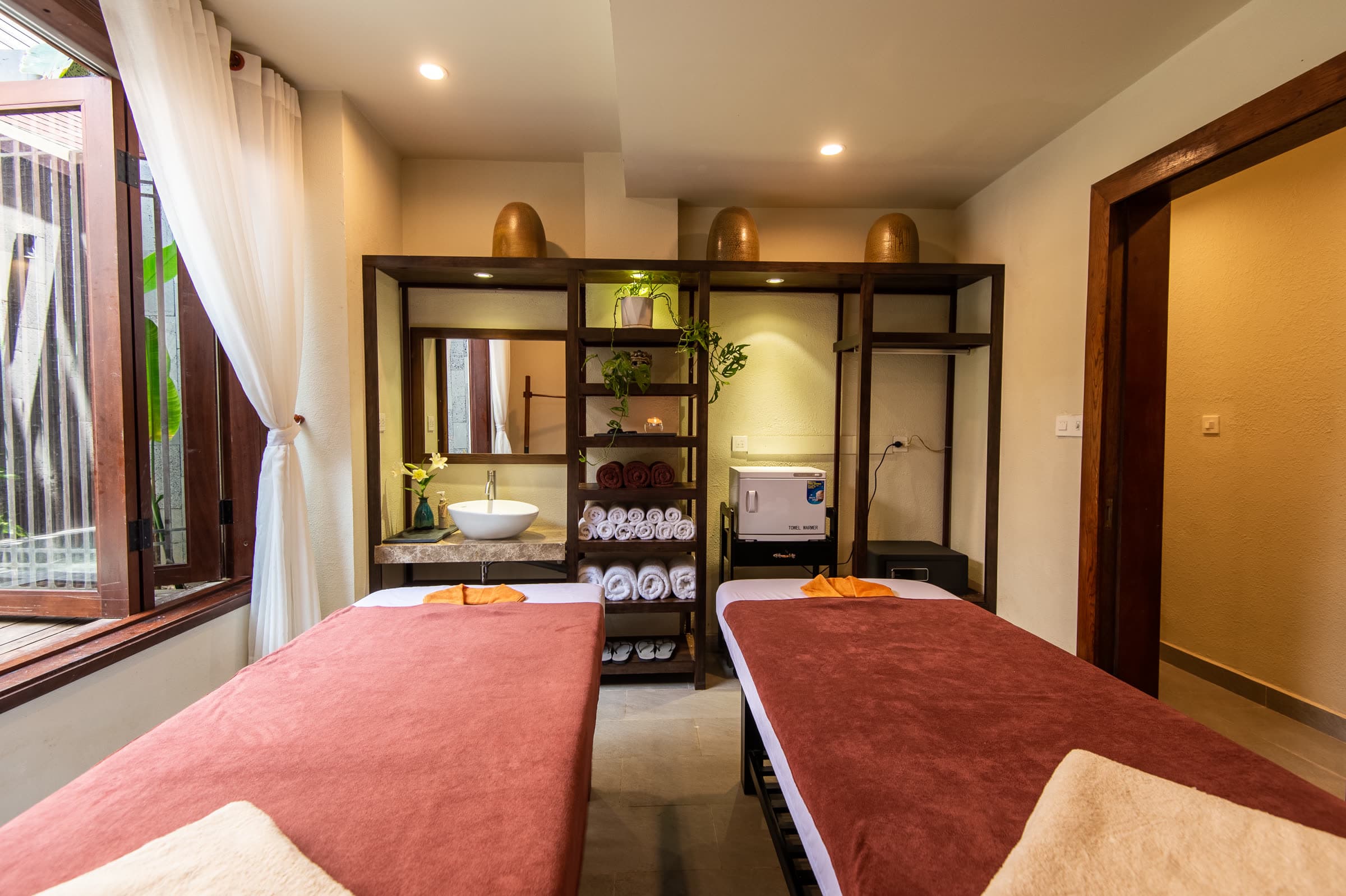
Every room at Nghê Prana is designed around the science of sleep. Blackout curtains, nightly aromatherapy turndown, and riverside quiet — experience what real rest feels like.
Riverside hotel rooms on the Thu Bồn, ten minutes by bicycle from the Ancient Town. Whether it's one night between Hue and Da Nang or a full week of doing nothing — we kept your room quiet.
Free cancellation · Direct from the family who built the hotel


 WhatsApp
 Zalo
Zalo