The four dishes you must try in Hội An are cao lầu, white rose dumplings (bánh bao bánh vạc), Hội An chicken rice (cơm gà), and mì Quảng. Each one is tied to a place, a family, or a well — none of them exist quite the same way anywhere else in Vietnam. This is a guide to what they actually are, where they came from, and how to eat them without overthinking it.
I grew up here. My grandmother sent me to Bá Lễ well for water on summer mornings. My aunt sold mì Quảng from a small stall near the river. So this guide is written the way I'd tell a friend who just arrived: what to order, where to find it, and which dishes we serve at the Nghê Prana room-service menu if you'd rather eat from your balcony than chase a street stall in the afternoon heat.
Quick reference: the dishes at a glance
If you only have time for one meal, eat cao lầu. If you want to taste the whole province in one bowl, eat mì Quảng. Below is each dish, what it is, where it comes from, the meal slot it belongs to, and the price you should expect to pay at a local stall. Prices are accurate as of May 2026.
Cao lầu — Hội An's signature noodle dish. Thick, chewy noodles topped with char-siu-style pork, fresh herbs, and crisp rice crackers — not a soup. The noodles require water drawn from Bá Lễ well, so the authentic version genuinely cannot be made anywhere else. Eat for lunch. Price: 40,000–70,000 VND (~$1.60–$2.80). Vegetarian: rare; available in temple kitchens during full-moon weekends.
White rose dumplings (bánh bao bánh vạc) — Steamed shrimp dumplings shaped like roses. For three generations every plate in Hội An has come from a single family on Hai Bà Trưng street; other restaurants buy from them. Eat as a starter or a light lunch. Price: 80,000–100,000 VND for a plate of ten. Vegetarian: no.
Hội An chicken rice (cơm gà) — Turmeric-yellow rice with poached free-range chicken, papaya salad, fresh herbs, and chicken broth on the side. Distinct from Sài Gòn cơm gà — pull-apart chicken instead of fried, layered herbs, lighter. Eat for lunch or dinner. Price: 40,000–70,000 VND at local stalls (Bà Buội, Bà Nga). Vegetarian: no.
Mì Quảng — Wide turmeric noodles with shrimp, pork, peanuts, and herbs in a small amount of broth. The everyday dish of Quảng Nam — different in every household. Eat for breakfast or lunch. Price: 30,000–60,000 VND (~$1.20–$2.40). Vegetarian: ask for mì Quảng chay — easy to find in temple kitchens.
Bánh mì Hội An — Crispy baguette with pâté, cured meats, herbs, pickled vegetables, and house chili. Widely regarded as the best bánh mì in Vietnam — the bread is crispier and the fillings more layered than the Sài Gòn version. Eat for breakfast or any time. Price: 20,000–40,000 VND (~$0.80–$1.60). Vegetarian: easy — ask for "chay".
Last verified: May 21, 2026. Prices reflect local stalls inside the Old Town and along Cẩm Châu; restaurant prices run 30–60% higher.
1. Cao lầu — the dish that can only be made in Hội An
Cao lầu is a bowl of thick, chewy, golden-brown noodles topped with char siu-style pork, fresh greens, bean sprouts, and a small amount of dense, savoury sauce — not a soup. You finish it with crisp rice crackers and a squeeze of lime. The texture is the point: the noodles have a firm, almost al-dente bite that you do not find in any other Vietnamese noodle dish.
The legend (which most locals still take seriously) is that real cao lầu can only be made with water from the Bá Lễ well, a stone-lined Cham-era well dating to roughly the 8th–10th centuries, and with lye made from wood ash sourced from the Cù Lao Chàm islands offshore. One family in Hội An has held the cao lầu noodle recipe for four generations — their great-grandfather learned it from a Chinese chef, and they still supply most of the cao lầu stalls in town.
Where to eat it: the Old Town is full of cao lầu — any stall near Trần Phú or the central market will do. Locals also rate the stalls along Thái Phiên Street and the small shops in Cẩm Châu.
Or order from your room: cao lầu is on our menu at 95,000 ₫. If you'd rather not chase a stall in the midday heat, you can order cao lầu via Nghê Prana room service and eat it on your balcony over the river.
2. White rose dumplings (bánh bao bánh vạc) — the family monopoly
White rose is the most photographed dish in Hội An: translucent rice-flour dumplings shaped like petals, filled with minced shrimp or pork, dusted with crisp fried garlic, served with a sweet-savoury dipping sauce. The "white rose" name was coined in the 1990s by a French traveller who thought the dumplings looked like opening flowers; locals still call them bánh bao bánh vạc.
The recipe has been held by one family in Hội An for over a century — they live and work on Hai Bà Trưng Street, in a courtyard house where three generations have steamed dumplings daily. Almost every white rose dish you eat in Hội An comes from their kitchen; restaurants buy the dumplings from them and steam them to order.
Where to eat it: anywhere in the Old Town. The Hai Bà Trưng family shop is the canonical address, but the dumplings are the same dumplings everywhere.
Or order from your room: white rose dumplings are on our menu at 115,000 ₫. They travel well — order via room service if you'd rather skip the queue.
3. Hội An chicken rice (cơm gà) — turmeric, herbs, ginger sauce
Cơm gà Hội An originated in the 1950s and is the local riff on the Chinese-Hainanese chicken-rice tradition that travelled south through trade. What makes the Hội An version different: the rice is cooked in chicken stock with turmeric until it turns saffron-yellow, the chicken is shredded (not sliced) and tossed warm with Vietnamese coriander, sliced onions, and lime, and the sauce is a sharp ginger-fish-sauce dressing rather than the chilli-ginger paste you'd find in Singapore.
You eat it slightly mixed: a bit of chicken with a forkful of rice, a slice of cucumber, a dip in the ginger sauce. Some shops serve it with a clear chicken broth on the side and pickled papaya.
Where to eat it: the Old Town has half a dozen famous cơm gà places — Bà Buội and Bà Minh are the canonical names. Locals also eat at smaller shops near the bus station on Hùng Vương.
Or order from your room: cơm gà is on our menu at 95,000 ₫ as Hội An chicken rice. Order via room service for a low-effort lunch on the balcony.
4. Mì Quảng — the Quảng Nam province dish you came south for
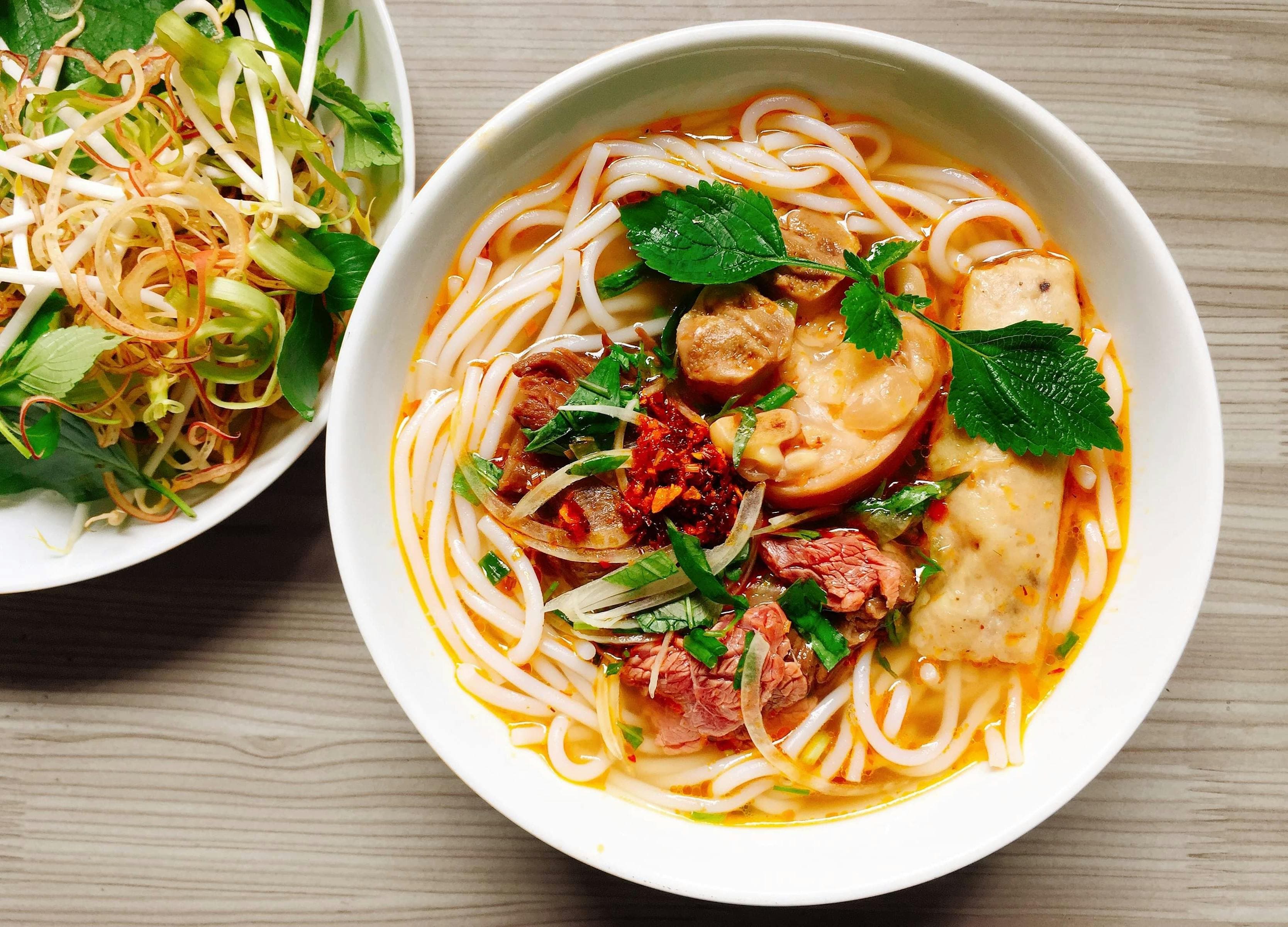
Mì Quảng is the everyday noodle dish of central Vietnam. It is not on our room-service menu — and you should specifically seek it out while you're here, because outside Quảng Nam province it's rare. The bowl is built around wide, flat, golden rice noodles, a small amount of intensely savoury turmeric-tinted broth (only about a quarter to half a cup — this is not a soup), topped with pork, shrimp, or chicken, peanuts, fresh herbs, and a large crisp sesame rice cracker (bánh tráng mè) broken into pieces and stirred in as you eat.
The broth-to-noodle ratio matters: you want everything moist, not swimming. Squeeze lime, add chilli, stir it all together. Mì Quảng is breakfast food for many locals — most stalls open at 6am and run out by lunchtime.
Where to eat it: mì Quảng is best in the small Cẩm Châu and Cẩm Hà neighbourhoods, away from the Old Town. The roadside stalls on the way to An Bàng beach serve excellent versions.
5. Bánh mì — the Hội An sandwich tradition
Hội An has a global reputation for bánh mì, the Vietnamese baguette sandwich that fuses French bread with Vietnamese fillings: pâté, cold cuts, pickled daikon and carrot, fresh herbs, chilli, and a house sauce. Anthony Bourdain called the bánh mì at Bánh Mì Phượng "a symphony in a sandwich" on his 2009 No Reservations episode, and the queue there has been long ever since. Locals are split between Phượng and Madam Khánh ("the Bánh Mì Queen") two streets away — both are excellent.
Bánh mì is not on our room-service menu — it's a street-food dish, and the bread is best within an hour of being baked. Walk to the Old Town for this one. Expect to pay 25,000 to 40,000 ₫ depending on the stall.
6. Bánh đập — the Cẩm Nam riverbank specialty
Bánh đập is the dish you cross the bridge for. Two layers of rice cake — one steamed and soft, one crisp and toasted — pressed together, broken with the side of your hand (the name literally means "smashed cake"), and dipped in a fermented anchovy-and-shrimp sauce called mắm nêm. Often eaten with chè bắp, a sweet corn pudding that is the other Cẩm Nam specialty.
You'll find bánh đập along the riverbank stalls on Cẩm Nam island, a ten-minute walk south of the Old Town across the Cẩm Nam bridge. Most of the riverside places do bánh đập and hến (baby clam) dishes together — read our guide to Cẩm Nam, Cẩm Kim and Cẩm Thanh for the full neighbourhood context.
7. Fresh and fried spring rolls — the starter every meal needs
Two versions of the same idea. Fresh spring rolls (gỏi cuốn) are translucent rice-paper wraps filled with shrimp, pork, vermicelli noodles, lettuce, and Vietnamese mint, served with a peanut-hoisin dipping sauce. Fried spring rolls (chả giò) are rolled in crisp rice paper and deep-fried golden, dipped in nước chấm — fish sauce diluted with lime, sugar, and chilli.
8. Crispy wonton — the Hội An snack you'll keep ordering
Hoành thánh chiên — Hội An's deep-fried wontons — are a remnant of the town's Chinese trading-port era. The crisp wonton wrapper is topped with a tomato-shrimp salsa, fresh herbs, and chilli. The contrast of crunch and acid is addictive. On our menu at 115,000 ₫.
Planning a trip around this? See dates at our quiet riverside hotel on the Thu Bồn. Check availability →
9. Bún bò Nghê — our house grilled-beef-vermicelli dish
Our house version of bún bò layers lemongrass-marinated grilled beef over cool rice vermicelli, fresh herbs, pickled carrots, crushed peanuts, and a light fish-sauce dressing. Different from Hue's bún bò Huế (which is a beef noodle soup) — this is the central-Vietnam grilled-beef-bowl idiom. 160,000 ₫ on our menu, and the dish guests come back for. Order from your room.
A note on vegetarian and vegan options
Hội An is one of the easier places in Vietnam to eat vegetarian or vegan, and it gets dramatically easier on the 1st and 15th of each lunar month — many Buddhist locals shift to chay (vegetarian) menus on those days, and a surprising number of restaurants will offer a chay version of every dish. Cao lầu, mì Quảng, and white rose all have chay variants — just ask for "phiên bản chay" (the chay version) or "không thịt" (without meat).
The Old Town has several full-time vegetarian restaurants — Karma Waters, Minh Hien, and the small chay restaurants near the central market. We can prepare vegetarian versions of most room-service dishes on request — just ask reception.
Ordering politely (and what to say)
You don't need fluent Vietnamese to eat well here. "Cho tôi một bát…" (give me one bowl of...) plus the dish name and "cảm ơn" (thank you) will get you through 90% of stalls. We wrote a longer guide to Vietnamese phrases worth learning before Hội An — it covers the 20 phrases that actually matter for restaurants, markets, and asking for directions.
One small thing: Vietnamese coffee culture is part of every meal. After cao lầu, locals walk to a small phin café for a slow-drip Vietnamese coffee — we wrote about why Vietnamese coffee tastes the way it does if you want the long version.
When to eat what
Breakfast (6–9am): mì Quảng, phở, or bánh mì from a street stall
Lunch (11:30am–1:30pm): cao lầu, cơm gà, or white rose in the Old Town
Afternoon snack (3–5pm): bánh đập and chè bắp on Cẩm Nam, or crispy wontons
Dinner (6–9pm): anything you missed at lunch, plus spring rolls and bún bò
The Old Town's pedestrian-only hours kick in at 9am and again from 3pm — these are the comfortable times to eat there. Between 11:30am and 3pm motorbikes are allowed back in, and the streets are hotter and noisier than the rest of the day.
The dishes you can also order from your room
To summarise — these are the canonical Hội An dishes that are also on the Nghê Prana room-service menu, so you can eat them from your balcony over the Thu Bồn River:
For mì Quảng, bánh mì, and bánh đập you'll need to walk out — they belong to the street and they're better that way. But if your kid is melting down at 6:30pm, or it's raining sideways in October, or you've just spent the day at My Sơn and you want to eat in a bathrobe — room service is open and the cao lầu travels well.
Hội An's food is the trading-port history made edible. Cao lầu has Chinese noodles, Japanese technique, and Cham-island lye. White rose came from a royal-maid grandmother who married into a Chinese family. Cơm gà is Hainanese chicken rice rewritten in turmeric and lime. Mì Quảng is the dish farmers ate when they had a bit of meat and a lot of herbs. Eat the four dishes. Drink the phin coffee. Walk the Old Town when it's pedestrian-only. The rest takes care of itself.
Cao lầu is Hội An's most famous dish — thick chewy noodles with char-siu pork, fresh herbs, and crisp rice crackers in a small amount of dense sauce, not a soup. It is widely considered impossible to make authentically outside Hội An because the noodles require water drawn from Bá Lễ well in the Old Town.
What should I eat for breakfast in Hội An?
Locals eat mì Quảng or bánh mì for breakfast. Mì Quảng is a bowl of wide turmeric noodles with shrimp, pork, peanuts, and herbs in a small amount of broth, served at street stalls from 6 to 10 a.m. Hội An bánh mì is widely regarded as the best in Vietnam and is sold throughout the day; the Old Town stalls open by 7 a.m.
Is Hội An food spicy?
Central Vietnamese food, including Hội An's dishes, leans more savoury and herbal than spicy. Heat is added at the table via fresh sliced chili or a small dish of chili paste, so guests control their own spice level. The base dishes — cao lầu, white rose, cơm gà, mì Quảng — are mild.
What is a reasonable food budget for a day in Hội An?
A guest eating only at local stalls can eat very well for 200,000–350,000 VND per day (~$8–$14), which covers three meals plus a coffee and a chè dessert. Adding one mid-range restaurant dinner brings the daily total to 500,000–800,000 VND (~$20–$32). High-end Old Town restaurants and resort dining run 800,000–1,500,000 VND per person for a single meal.
Is there vegetarian food in Hội An?
Yes, vegetarian (chay) food is widely available in Hội An. Most local dishes have a chay version — mì Quảng chay, bún chay, cao lầu chay — and these are easiest to find on the 1st and 15th of each lunar month, when many Vietnamese eat vegetarian. Restaurants on Trần Cao Vân and around the Quan Âm pagoda specialise in chay cuisine.
Where can I find the most authentic cao lầu in Hội An?
The most respected cao lầu stalls in Hội An are along Trần Phú and Thái Phiên streets in the Old Town. Quán Cao Lầu Thanh and Bà Bé are widely cited by locals. The noodles at authentic stalls are made by hand using ash water and Bá Lễ well water, then dried for a day before serving.
Can I get phở in Hội An?
Yes, phở is available in Hội An, but it is not a regional specialty — phở is from northern Vietnam and arrived in central Vietnam relatively recently. Locals will more often eat mì Quảng or cao lầu. If you want phở, look for shops labelled phở bò or phở gà rather than ordering it at a cao lầu stall.
What is the difference between Hội An chicken rice and Sài Gòn chicken rice?
Hội An chicken rice (cơm gà Hội An) uses poached free-range chicken pulled into shreds, turmeric-stained rice cooked in chicken broth, papaya salad, and a side of clear soup. Sài Gòn cơm gà typically uses fried or roasted chicken served on plain rice. The Hội An version is lighter, more herbal, and considered the classic central-Vietnam preparation.
Where do locals actually eat in Hội An?
Locals in Hội An generally avoid the inner Old Town and eat in the surrounding wards: Cẩm Châu, Cẩm Nam, and Tân An. The cơm gà stalls on Phan Chu Trinh, the mì Quảng vendors near An Hội bridge, and the family bánh mì shops along Hùng Vương are where guests in the know go. Prices are 30–50% lower than tourist-zone equivalents.
Is street food in Hội An safe to eat?
Street food in Hội An is generally safe to eat for visitors. Look for stalls with high turnover — long queues, food cooked to order, fresh herbs replenished frequently — which are the same signals locals use. Avoid pre-cooked food sitting out in the heat. Bottled water for drinking is standard practice; tap water is not used for drinks.
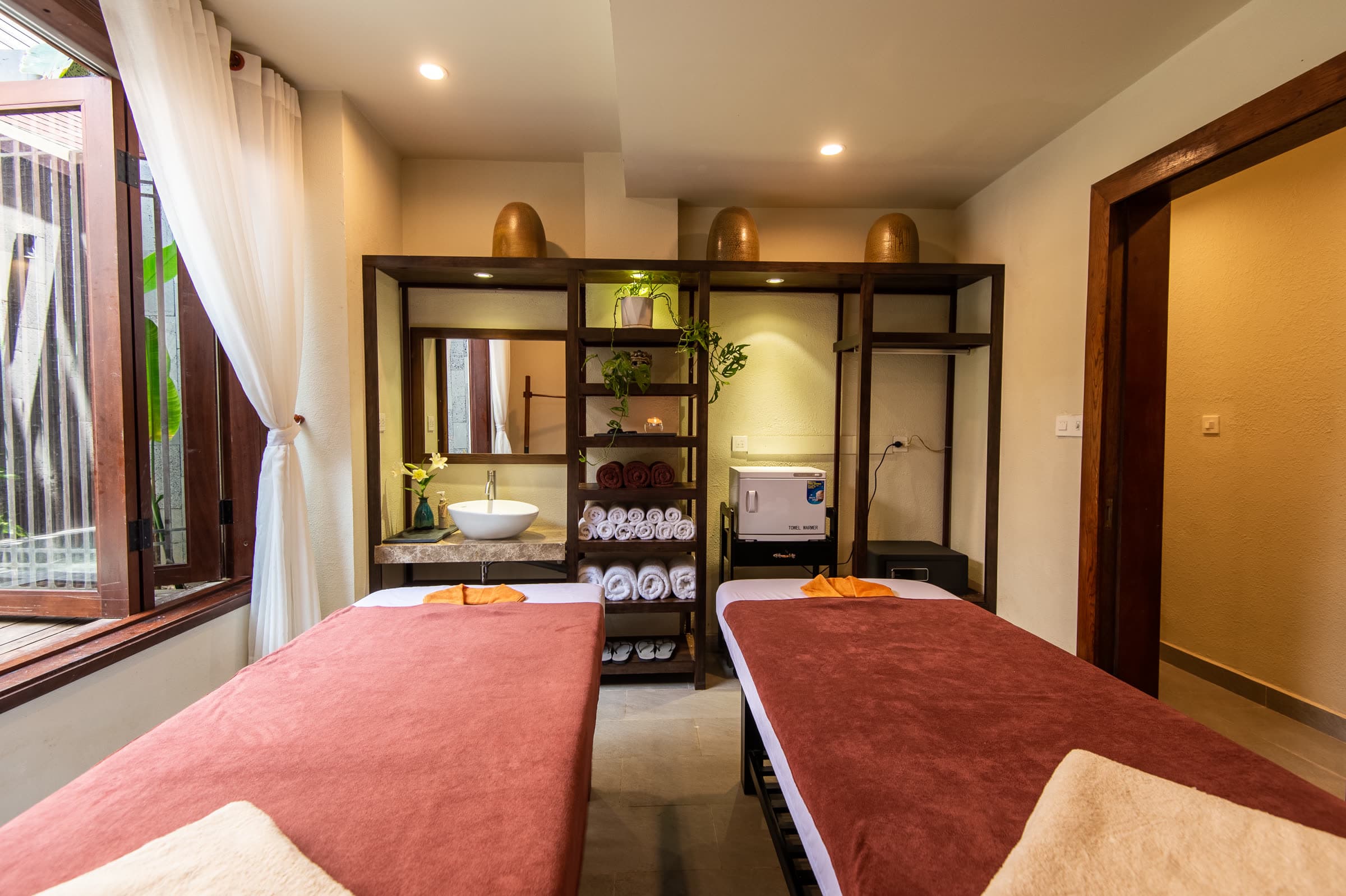
Every room at Nghê Prana is designed around the science of sleep. Blackout curtains, nightly aromatherapy turndown, and riverside quiet — experience what real rest feels like.
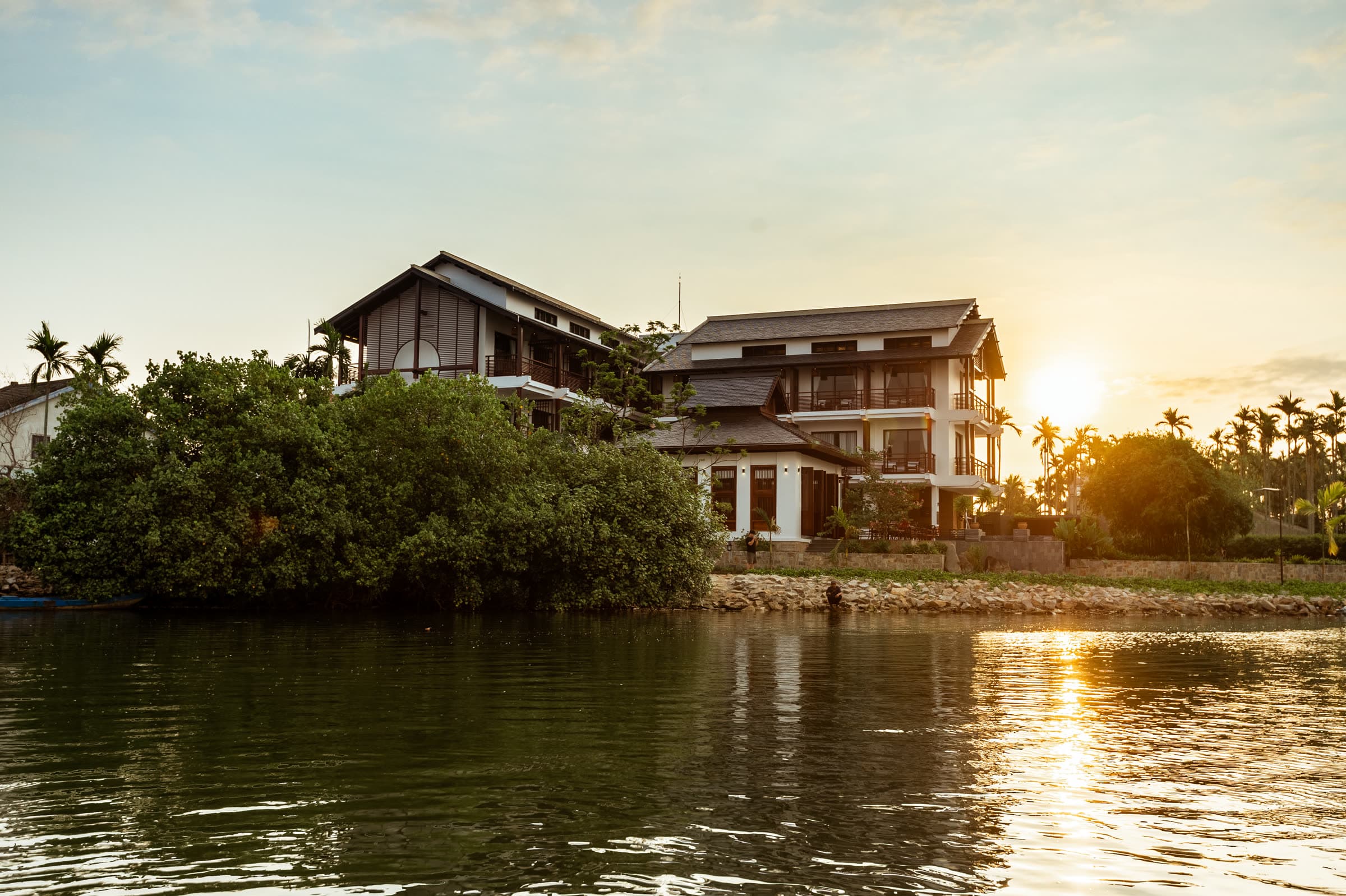
Riverside hotel rooms on the Thu Bồn, ten minutes by bicycle from the Ancient Town. Whether it's one night between Hue and Da Nang or a full week of doing nothing — we kept your room quiet.
Free cancellation · Direct from the family who built the hotel

 WhatsApp
 Zalo
Zalo