Hội An rainfall by month — 10-year climatology with mm, rain days, air temperature, sea temperature, and one travel note per month. Plain data, no marketing.
Hội An receives about 2,400 mm of rain per year, concentrated in a sharp September–November monsoon. Outside that window the town is dry, hot, and good for the river. This is what the long-run climate data actually says, month by month.
The numbers below are 10–30 year averages pulled from WeatherSpark, Climate-Data.org, weather-and-climate.com, and the Vietnam Tourism Authority's published climate notes — cross-referenced against Open-Meteo historical reanalysis for the Hội An grid cell. They are climatology, not forecast. Any given year can run wet or dry by ±30%.
The 12-month table
| Month | Rain (mm) | Rain days | High (°C) | Low (°C) | Sea (°C) |
| --- | --- | --- | --- | --- | --- |
| January | 82 | 13 | 25 | 19 | 23 |
| February | 30 | 6 | 26 | 20 | 23 |
| March | 35 | 5 | 28 | 22 | 24 |
| April | 77 | 8 | 31 | 23 | 26 |
| May | 110 | 9 | 33 | 25 | 28 |
| June | 99 | 11 | 34 | 26 | 29 |
| July | 90 | 10 | 34 | 26 | 29 |
| August | 104 | 11 | 33 | 25 | 29 |
| September | 297 | 16 | 31 | 24 | 28 |
| October | 526 | 19 | 29 | 23 | 28 |
| November | 454 | 18 | 27 | 22 | 26 |
| December | 210 | 15 | 25 | 20 | 24 |
Annual: ~2,114 mm of rain across ~141 rain days. The single wettest month (October, 526 mm) delivers more than seventeen times the single driest (February, 30 mm).
What each month actually looks like
January. Cool by Vietnamese standards. Air sits around 19–25°C with light drizzle on roughly half the days. Locals wear sweaters in the morning. The river is calm. Good for tailoring, cooking classes, museum days, and slow river walks. Sea temperature dips to 23°C — swimmable, but most travelers find the air not quite warm enough to enjoy it.
February. The driest month of the year. Six rain days, 30 mm of rain. Daytime highs climbing into the high 20s. The best month of the year for travel if you want predictable weather without the May–June heat. Tết usually falls late January or mid-February — check the lunar calendar before booking.
March. Drier still in some years; 35 mm average. The sun comes out properly, temperatures hit 28°C in the afternoon. Beach days start being genuinely pleasant. Light shoulder season — rooms are easier to find than in February.
April. Warming up. Average high 31°C, occasional pre-monsoon thunder showers in the afternoon. The air is still relatively dry by Southeast-Asian standards. The river starts running greener as upstream rains begin.
May. The first wet-warm month. 110 mm of rain spread across nine days — mostly evening thunderstorms that clear by morning. Air highs 33°C. Sea reaches 28°C, properly warm for swimming. May 30 onward, Hội An's monthly Old Town lantern night returns to its full warm-weather feel.
June. The hottest month. Highs of 34°C, lows of 26°C — no real cool-off at night. Rainfall is moderate (99 mm) but concentrated in dramatic short storms. Run errands early; spend midday by the river or in an air-conditioned room.
July. Similar to June. Heat and short storms. The light has a hard, bright quality that photographers love. Sea temperature hits its annual peak around 29°C.
August. Slight rainfall uptick (104 mm) as the early monsoon system organises. Still summer. The crowd peak in Vietnam — European school holidays plus Korean and Japanese summer breaks. Book early.
September. The shift. 297 mm of rain in 16 days — three times August's volume. Storms become longer and heavier, often arriving in afternoons and persisting overnight. The Thu Bồn river starts to rise visibly. Mid-Autumn Festival (Tết Trung Thu, around late September in most years) is one of the most beautiful events in Hội An despite the rain.
October. The wettest month. 526 mm of rain across 19 days. Humidity reaches 85%. Central Vietnam's typhoon season is in full force — most years bring one or two named storms making landfall somewhere between Huế and Quảng Ngãi. Some hotels in the Old Town's lower elevations see knee-high flooding on the worst river-rise days. See Hội An flood zones — an honest October–November hotel map for the actual risk by neighborhood.
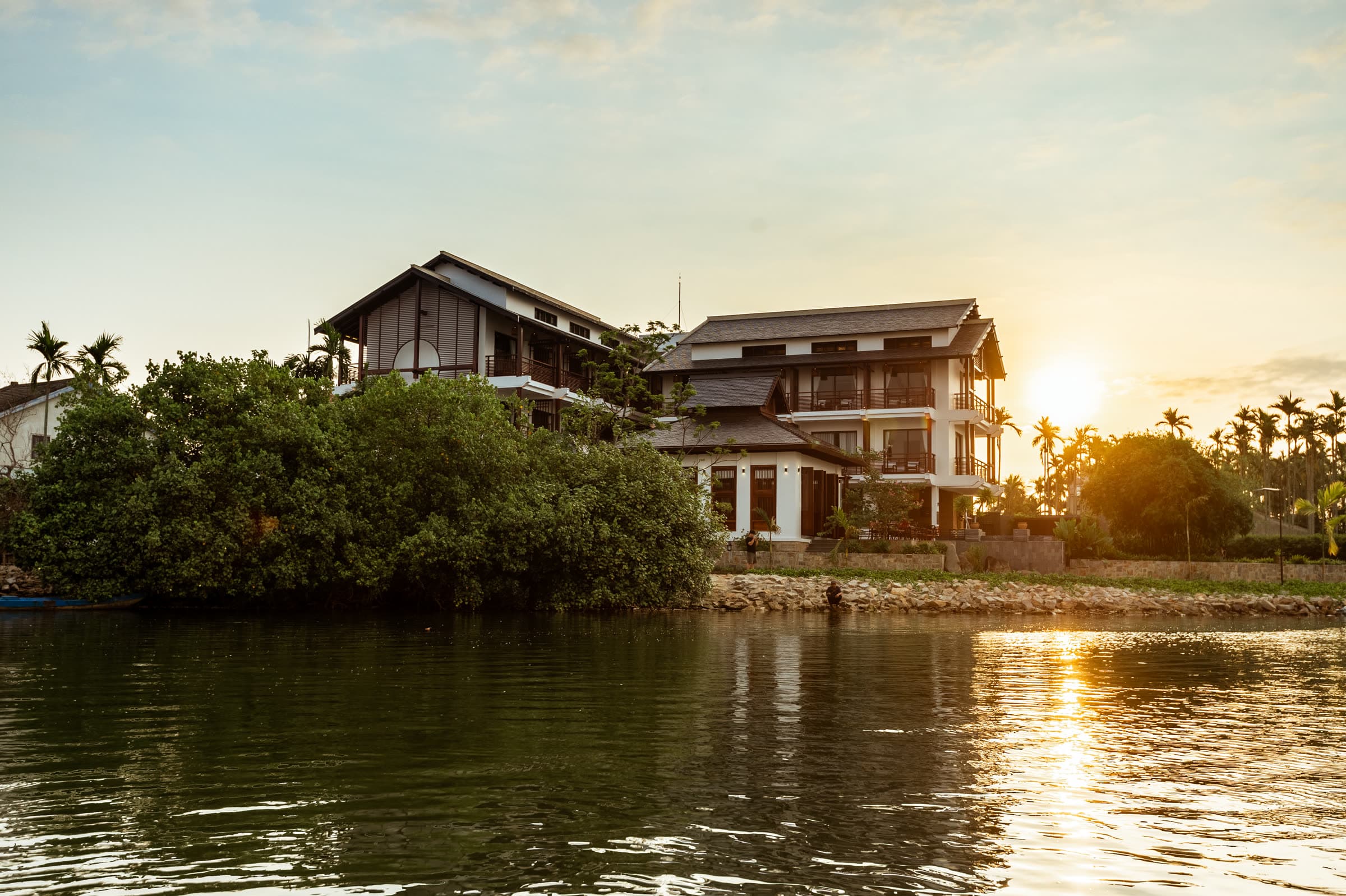
Planning a trip around this? See dates at our quiet riverside hotel on the Thu Bồn. Check availability →
November. Still wet — 454 mm — but the structure changes. The big tropical systems weaken; rainfall is steadier and more predictable. By mid-November, the worst of the monsoon usually breaks. Late November can be glorious: 25°C air, the river full and high, fewer tourists.
December. Transition month. 210 mm of rain across 15 days, but spread out and less violent than October's storms. Air cooling to 25°C highs and 20°C lows. The river starts to fall back to its winter level.
Sea temperature — when to swim
Hội An and Da Nang share the same coastal water. Temperatures range from 23°C in winter (January–February) to 29°C in summer (June–August). For most travelers, the swim-comfort threshold is around 25°C, which corresponds to April through November. Locals swim year-round and consider 23°C "refreshing"; visitors from cooler climates may find January–March water bracing.
How to read this if you are picking dates
For warm weather + dry conditions: February through May. The classic Hội An window. Light layers, sun, swimmable sea by April.
For hot weather + summer light + crowds: June through August. Highs 33–34°C. The river and beach are at their best for swimming. Book early; this is peak season for several feeder markets.
For the monsoon experience: September through November. Many travelers actively prefer this window. Fewer crowds, cooler air, the river running full and silty, dramatic skies, and rates 30–50% below peak. Just choose a hotel above the flood line and treat the weather as part of the rhythm, not the obstacle.
For mild + transitional: December and January. Cool by tropical standards. Good for cultural days — tailoring, cooking classes, museums. Sea on the cool side, sky often overcast.
A note on monsoon framing
Outside tourism marketing, central Vietnam's rainy season is not a season to "avoid." It is part of the year's rhythm — the river fills, the rice cycle resets, fish return upstream, and the town slows. The cooler air after rain is genuinely pleasant. The cafés stay open. The pace becomes contemplative. A wet-season Hội An afternoon spent watching the Thu Bồn from a covered terrace is a different kind of good day, not a worse one.
Sources and methodology
Rainfall and temperature figures averaged from weather-and-climate.com Hội An, Climate-Data.org Hội An, and WeatherSpark's Hội An climatology page. Sea-temperature figures from SeaTemperatu.re's Hội An station. Typhoon-season framing from the Vietnam Tourism Authority climate notes. Values rounded to nearest mm and °C; sea temperature stated as monthly mean of surface readings.
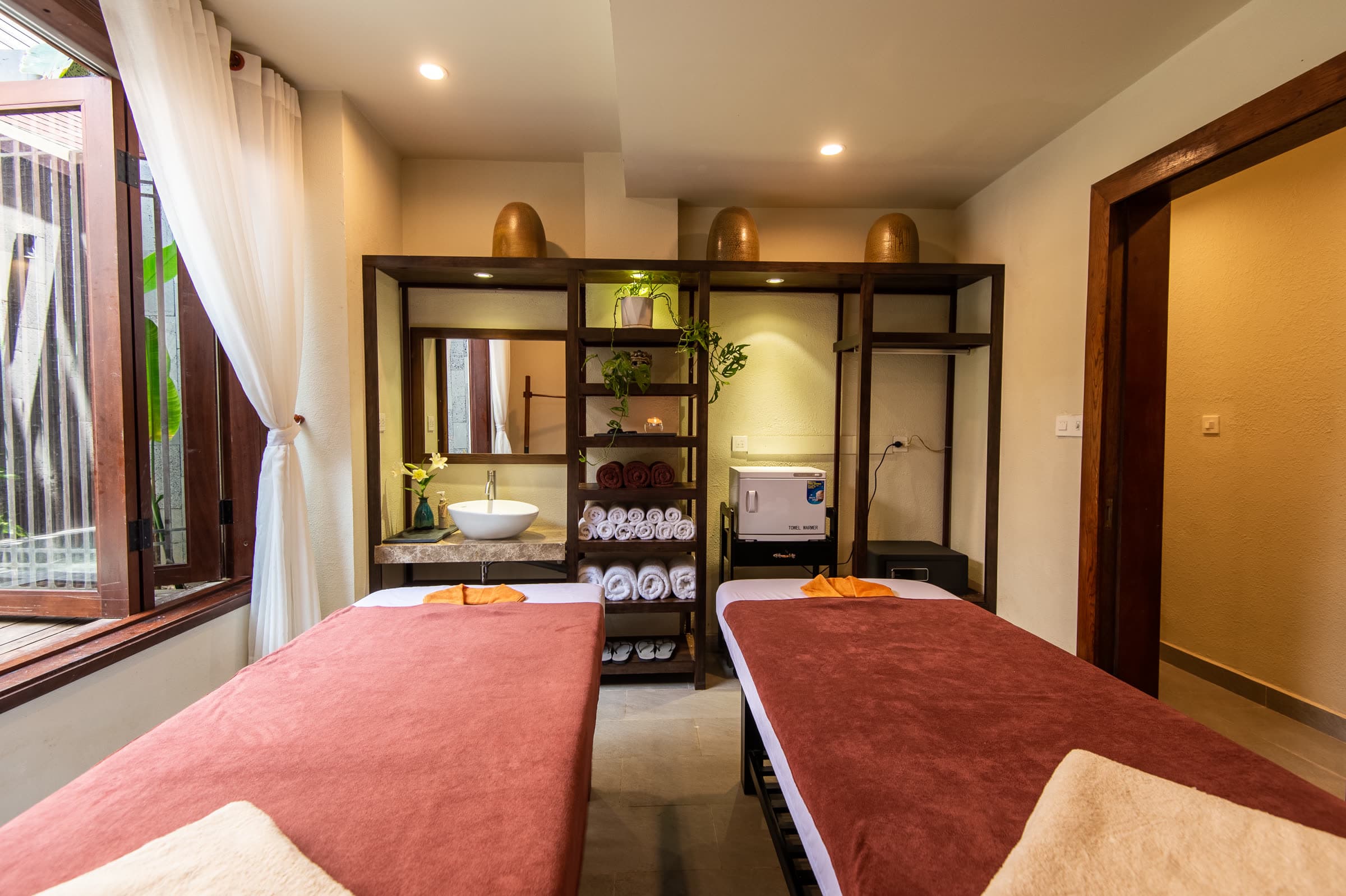
Every room at Nghê Prana is designed around the science of sleep. Blackout curtains, nightly aromatherapy turndown, and riverside quiet — experience what real rest feels like.
Riverside hotel rooms on the Thu Bồn, ten minutes by bicycle from the Ancient Town. Whether it's one night between Hue and Da Nang or a full week of doing nothing — we kept your room quiet.
Free cancellation · Direct from the family who built the hotel


 WhatsApp
 Zalo
Zalo