Tết 2027 — Vietnamese New Year in Hội An: Every Date, What Actually Closes, and Why It Is Still Worth Coming
Tết Nguyên Đán 2027 falls on Saturday 6 February. This is the honest version: the verified lunar dates from Ông Táo to Nguyên Tiêu, exactly what closes in Hội An on mùng 1–3 and when it reopens, what gets better than usual, and why the smart trip is the three-week window — Kim Bồng on 11 February, Trà Quế on 12 February, and the year's biggest lantern night on 19 February — rather than the three days everyone else plans around.
Every year, somewhere around November, the same question starts arriving in our inbox in three languages: we're looking at Vietnam in early February — is Tết a terrible idea? The honest answer is that Tết is the single best week to understand this country and the single worst week to improvise in it. Almost everything you read in English gets one half of that right and the other half wrong: the blogs either warn you off entirely ("everything is closed, don't come") or sell you a postcard ("magical family atmosphere!") without telling you that the noodle place you bookmarked will have its shutter down for four days. This guide is the version we give guests: the verified 2027 dates, what genuinely closes in Hội An and when it reopens, what gets better than usual, and how to plan around it from the quiet side of the river.
TL;DR — Tết Nguyên Đán 2027, the Vietnamese Lunar New Year, falls on Saturday 6 February 2027 (mùng 1, the Year of the Goat / Đinh Mùi). The intense family days are mùng 1–3: Saturday 6 to Monday 8 February, when many family-run kitchens, tailors, markets and offices in Hội An close. Hotels, tourist-facing restaurants and transport keep running. The Old Town does not go dark — it goes red and gold. And the festival window does not end on mùng 3: Kim Bồng's carpentry rite (11 Feb), Trà Quế's harvest blessing (12 Feb) and the year's biggest lantern night, Nguyên Tiêu on Friday 19 February 2027, all fall inside the following fortnight. Come for two weeks, not for three days, and Tết stops being a risk and starts being the reason you came.
Tết 2027: the dates, verified
Tết is set by the lunar calendar, so the Gregorian date moves every year. Here is the 2027 sequence, anchored on lunar 1/1 = Saturday 6 February 2027.
Date (2027)
Lunar date
What it is
Sat 30 Jan
23 tháng Chạp
Ông Công Ông Táo — the Kitchen Gods ride to heaven; live carp released into the river
Late Jan – 5 Feb
24–29 tháng Chạp
Tất niên: year-end cleaning, grave-tending, flower markets, company year-end meals
Fri 5 Feb
29 tháng Chạp
Giao thừa — New Year's Eve; the year turns at midnight. There is no 30th this year
Sat 6 Feb
mùng 1 tháng Giêng
Tết Nguyên Đán — New Year's Day. Paternal family, pagoda visits, xông đất
Sun 7 Feb
mùng 2
Maternal family day
Mon 8 Feb
mùng 3
Teachers and mentors; many businesses hold their reopening rites
Thu 11 Feb
mùng 6
Kim Bồng carpentry village's giỗ Tổ nghề mộc, across the river
Fri 12 Feb
mùng 7
Trà Quế herb village's Cầu Bông harvest-blessing rite
Fri 19 Feb
14 tháng Giêng
Hội An's lantern night — the biggest one of the year
Sat 20 Feb
15 tháng Giêng
Rằm tháng Giêng / Nguyên Tiêu, the first full moon of the lunar year
Fri 16 Apr
10 tháng Ba
Hùng Kings' Commemoration Day — a national holiday, and a domestic travel wave
Two details most listings get wrong, and both change how you plan. First, the run-in to Tết is a day shorter than usual. Tháng Chạp — the twelfth lunar month of the outgoing year — is a tháng thiếu, a short month of 29 days, so there is no 30 tháng Chạp in 2027 at all. Giao thừa therefore falls on the 29th, Friday 5 February, and Ông Công Ông Táo on Saturday 30 January. Any source that assumes a 30-day final month places both a day early. Second, the official public holiday is not the festival, and for 2027 it is still being decided. Vietnam's Ministry of Home Affairs circulated a draft holiday schedule for public consultation from 4 to 10 August 2026, with two options for Tết: a seven-day block from 4 to 10 February, or a longer public-sector block from 5 to 14 February. On 11 September 2026 the Ministry chose the first and submitted it to the Government: seven consecutive days, Thursday 4 to Wednesday 10 February 2027, five statutory days plus two days in lieu. The Prime Minister's decision had not been published as of 22 September 2026. The same draft proposes that future schedules be announced by 30 September of the preceding year. It is that announcement, not the lunar date, that determines when domestic flights and trains sell out — the full picture is in our Vietnam public holidays 2027 guide, and we will update both pages when the decision lands.
The weeks before mùng 1 are the loud, joyful part: streets of red and gold, blossom branches, and shopping that does not stop until midnight. · Những tuần trước mùng 1 mới là lúc rộn ràng nhất — phố xá đỏ vàng, cành hoa và chợ Tết thâu đêm.
Is Hội An "closed" during Tết?
No — but the composition of the town changes, and that is the thing nobody explains properly.
Hội An has two economies sitting on top of each other. There is the visitor-facing one — hotels, the restaurants along Bạch Đằng and Nguyễn Thái Học, boat operators, the Old Town ticket gates — and there is the family one: the bánh mì cart run by one household, the cao lầu place with six tables, the tailor whose whole workshop is three cousins. During Tết, the first economy keeps working, because Tết is a peak week. The second economy stops, because the people who are the business are at home with their parents.
So the practical answer is not "open" or "closed". It is this: the polished layer of Hội An stays available, and the layer you probably came for goes quiet for about three days, then comes back — often with a small firecracker of a reopening ceremony out front.
The other shift is who is in town. International arrivals dip in the days right around mùng 1, so the Old Town in the first evenings can be genuinely calmer than a normal February night. Then, from about mùng 3 onward, Vietnamese domestic tourism arrives in force — families on their annual trip, three generations in matching áo dài photographing each other on the Japanese Bridge. If you have ever wanted to see Hội An full of Vietnamese people rather than full of tourists, this fortnight is the answer.
What actually closes, and when it comes back
Family-run restaurants and street food: mùng 1–3, sometimes to mùng 5. This is the real inconvenience. Expect a meaningful share of the small kitchens you had bookmarked to be shut, with a handwritten sign giving a reopening date. Plan your mùng 1 and mùng 2 meals in advance rather than wandering and hoping.
Tailors: usually the longest closure. Hội An's tailoring workshops commonly close for the better part of a week, and the ones that reopen early are working reduced hours with a skeleton team. If a suit or dress is part of your trip, either finish the fittings before 5 February or push the whole thing to the second half of the month — our tailor turnaround guide explains why a rushed three-day job goes wrong even in a normal week.
Markets: partly. The central market and Cẩm Nam's local market wind down on mùng 1, with a handful of stalls back by mùng 2 and something close to normal by mùng 4–5. In the days before Tết they are the opposite of closed — the flower and fruit sections are the best they will look all year.
Banks, offices, post, visa services: closed for the official holiday block. Do your money before the holiday. ATMs run but are heavily used and occasionally empty in the first days; carry more cash than usual and keep small notes.
Cooking classes, workshops, guided tours: reduced. Many run a limited schedule or pause entirely across mùng 1–3. Book anything you actually care about weeks ahead and reconfirm.
Taxis and Grab: running, with holiday pricing. Transport works throughout — this is a normal, openly-posted holiday surcharge across Vietnam, not a Hội An quirk. Airport transfers are the thing to arrange in advance rather than on the day; see the Đà Nẵng airport transfer guide.
Where the town goes on mùng 1: not out, but home, around a table like this one. It is why the small kitchens close — and why the ones that reopen do it with a firecracker. · Mùng 1, cả nhà quây quần bên mâm cơm — đó là lý do các quán nhỏ đóng cửa mấy ngày Tết.
What is better than usual
The Old Town is dressed. Kumquat trees and yellow mai appear on every doorstep and shopfront, red couplets go up on the old timber houses, and the lanterns that are normally a tourist backdrop are doing their actual job. This is the one time of year the Ancient Town's decoration is not for you.
The pagodas are alive. On the eve and on mùng 1, people go to temple — Chùa Ông (the Quan Công temple on Trần Phú), Chúc Thánh and Phước Lâm out past the edge of town — to burn incense and ask for a good year. Go early, stand at the back, and do not photograph people mid-prayer without asking. It is the least performed thing you will see in Hội An.
Incense at the turn of the year. On the eve and on mùng 1 the pagodas fill from before dawn. · Hương khói đêm giao thừa và sáng mùng 1 — chùa đông từ tờ mờ sáng.
The river. Cẩm Nam, Cẩm Kim and Cẩm Thanh — the quiet islands on the far bank — are where Tết is still a village festival rather than a town event. You will cycle past open front rooms with the altar laid, kids in new clothes, and a lot of people who will wave at you. Nothing is staged, because nobody is selling anything that week.
Nguyên Tiêu. The first full moon of the lunar year is the biggest lantern night Hội An runs — bigger than the monthly ones, bigger than Mid-Autumn for atmosphere. In 2027 the lantern night falls on Friday 19 February, with Rằm tháng Giêng itself on Saturday 20 February. If you can only align your trip with one date on this page, align it with that one. Full monthly dates are in our 2027 lantern calendar.
Hoa đăng on the Hoài at night. Nguyên Tiêu — Friday 19 February 2027 — is the year's biggest version of this. · Thả hoa đăng đêm Nguyên Tiêu, đêm rằm lớn nhất trong năm của phố cổ.
Plan for three weeks, not three days
This is the single most useful reframe we can give you. Foreign visitors treat Tết as a three-day event to be survived or avoided. Vietnamese people treat it as a season — the run-up from Ông Táo, the family core, then a fortnight of village festivals that only happen because everyone is already home.
In Hội An that fortnight is unusually dense. On Thursday 11 February (mùng 6), the carpentry village of Kim Bồng holds the ancestor rite for the guild that physically built the Old Town — see the Kim Bồng festival guide. On Friday 12 February (mùng 7), the 500-year-old herb village of Trà Quế holds its Cầu Bông flower-offering and harvest blessing — the Trà Quế Cầu Bông guide has the detail. Then the fortnight closes with Nguyên Tiêu on 19–20 February.
A trip landing around 5–20 February 2027 therefore catches the eve, the family days, two village festivals and the year's biggest lantern night, in a town small enough to do all of it by bicycle. There is no other two-week window in the Hội An calendar that stacks like that.
Mai, quất, and the flower market
The most photogenic part of Tết happens before it starts. In the ten days or so before mùng 1, flower markets take over public space in every Vietnamese town — pots of chrysanthemum and marigold in ranks, cumquat (quất) trees loaded with orange fruit, and the flower that means Tết in central and southern Vietnam: hoa mai, the yellow apricot blossom. The north uses pink peach blossom (hoa đào); from roughly Đà Nẵng southward it is mai, and the goal is to have it burst open exactly on mùng 1.
Hoa mai — the yellow apricot blossom that means Tết in central and southern Vietnam. Timing the bloom to mùng 1 is a genuine household art. · Hoa mai vàng — sắc Tết của miền Trung và miền Nam; canh cho mai nở đúng mùng 1 là cả một nghệ thuật.
The Tết flower market in the days before mùng 1 — the best free photography in Vietnam, and it disappears overnight. · Chợ hoa Tết những ngày giáp mùng 1 — rực rỡ nhất năm, rồi biến mất sau một đêm.
Buy nothing and just walk through it. The market appears, runs at full volume for a week, and is gone by the morning of mùng 1 — swept away so the year can start clean.
Bánh chưng, bánh tét, and the Hội An difference
The Tết cake is glutinous rice, mung bean and pork, wrapped in leaves and boiled for hours. Most English writing calls it bánh chưng and shows the square northern version. In Hội An and across Quảng Nam you are far more likely to be handed bánh tét — the same idea rolled into a cylinder, wrapped in banana leaf, sliced into discs. If someone offers you a slice, take it; refusing food at Tết is a real awkwardness in a way that refusing it in July is not.
Planning a trip around this? See dates at our quiet riverside hotel on the Thu Bồn. Check availability →
Bánh chưng before the long boil — the northern square version. In Hội An, look for the cylindrical bánh tét instead. · Bánh chưng trước khi luộc; ở Hội An bạn sẽ thường gặp bánh tét hơn.
Laying out the offerings. The cakes, the mai, the fruit tray — assembled by hand, every year, in every house. · Bày mâm cỗ Tết: bánh, mai vàng, mâm ngũ quả — năm nào cũng vậy, nhà nào cũng vậy.
Etiquette, briefly
Xông đất. The first person to enter a home in the new year is believed to set its luck for the year. Do not drop in on a Vietnamese household on the morning of mùng 1 unless you have been specifically invited — and if you are invited, treat it as the compliment it is.
Lì xì. Red envelopes of crisp new notes go to children and to elders, not between peers. Small amounts. Give and receive with two hands.
Wear colour. Red and yellow are lucky; black and stark white read as funeral colours. Nobody will correct you, but you will notice you are the only one in black.
Say it.Chúc mừng năm mới (happy new year) covers everything. An khang thịnh vượng — peace and prosperity — is the one that gets a real smile out of an older person. Our phrases guide has the pronunciation.
Don't sweep on mùng 1. Sweeping the floor on New Year's Day sweeps the luck out. Also relevant: this is why the town looks immaculate on the 31st and slightly untidy by the 2nd.
Where to stay during Tết
Two things matter more than usual. The first is booking early: the official holiday announcement in the autumn triggers a rush on domestic flights and trains, and while Hội An hotel supply is large, the good riverside rooms in that fortnight go early and minimum stays appear. The second is which side of town you are on — because during Tết, the difference between the Old Town and the river stops being about noise and becomes about what you actually get to see.
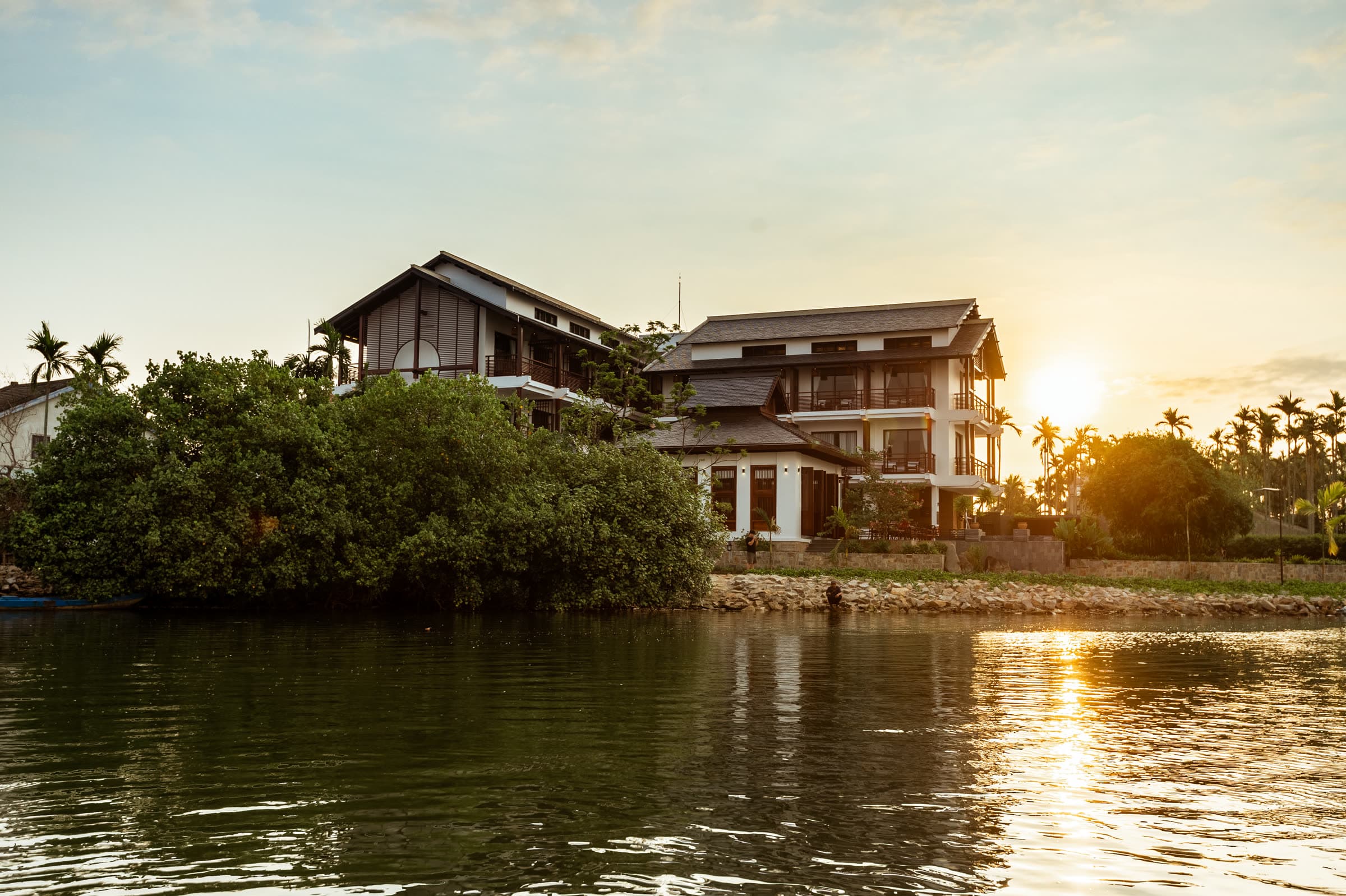
Nghê Prana is a riverside hotel on the Cẩm Nam side of the Thu Bồn, across the water from the Ancient Town. In an ordinary week that is a quietness argument. During Tết it is an access argument: you are staying inside a residential neighbourhood where Tết is being lived — altars laid in open front rooms, mai trees carried home on motorbikes, kids let loose in new clothes — and you are still ten minutes by bicycle from the Old Town when you want the lanterns. See our rooms for the riverside layout — and if a specific week matters to you, ask us directly before you book: we will tell you honestly which services are running on which of the holiday days, rather than letting you find out on mùng 1.
Frequently Asked Questions
When is Tết 2027 in Vietnam?
Tết Nguyên Đán 2027 falls on Saturday 6 February 2027 (mùng 1 tháng Giêng), beginning the Year of the Goat (Đinh Mùi). New Year's Eve — giao thừa — is Friday 5 February, which in 2027 is the 29th day of the twelfth lunar month rather than the 30th, because tháng Chạp is a short month this year. The core family days are mùng 1–3, Saturday 6 to Monday 8 February. The official paid-holiday block is decided separately: a draft circulated for consultation in August 2026 proposes either 4–10 February or 5–14 February 2027. On 11 September 2026 the Ministry submitted the seven-day option (4–10 February) to the Government; the decision was still pending on 22 September 2026.
Is Tết the same as Vietnamese New Year, Lunar New Year and Chinese New Year 2027?
Tết is the Vietnamese name; "Vietnamese New Year", "Vietnamese Lunar New Year" and "Lunar New Year in Vietnam" all mean the same day, mùng 1 tháng Giêng. In 2027 that is Saturday 6 February — the same day as Chinese New Year 2027. The two do not always agree: Vietnam fixes its lunar calendar on the UTC+7 meridian and China on UTC+8, so a new moon that falls close to midnight can start the month on different days in the two countries. Wikipedia's Tết article records 1985, when the whole month shifted and Vietnam celebrated on 21 January while China waited until 20 February; the same two-meridian computation also separates 1968 (29 vs 30 January) and 2007 (17 vs 18 February). For 2027 and 2028 the two calendars give the same day. Verified 22 September 2026 with the Hồ Ngọc Đức algorithm run at both meridians.
What animal is Tết 2027?
The Goat. 2027 is the lunar year Đinh Mùi: Mùi is the earthly branch Vietnamese reads as dê, the goat, and Đinh is a fire stem, so English pages write "Year of the Goat" or "Fire Goat". The Chinese zodiac renders the same branch as goat, sheep or ram — one animal, three translations. The year runs from Saturday 6 February 2027 to Tuesday 25 January 2028. It is not the Horse: that is 2026, Bính Ngọ. Several pages carried the wrong animal for 2027 this year, including for a time this site's own festival calendar, corrected on 9 September 2026.
How long is the Tết 2027 holiday?
Two different answers. The festival has no fixed length: the run-in begins with Ông Táo on 30 January, the core family days are mùng 1–3 (6–8 February), and the season closes with Nguyên Tiêu on 19–20 February. The official public holiday is set each year by the Prime Minister. For 2027 the Ministry of Home Affairs put two options to consultation in August 2026 and on 11 September 2026 submitted the first to the Government: seven consecutive days, Thursday 4 to Wednesday 10 February 2027 (28 tháng Chạp to mùng 5), five statutory days plus two days in lieu of the weekend. The decision had not been published as of 22 September 2026; it is expected by 30 September and this answer will be updated. Banks, offices and government services close for the official block; family-run shops and kitchens follow the festival, not the decree.
When is Tết 2028?
Wednesday 26 January 2028 — the Year of the Monkey, Mậu Thân. The lunar year Đinh Mùi is eleven days short of a solar year, so Tết arrives eleven days earlier than in 2027. Rằm tháng Giêng 2028 falls on Wednesday 9 February 2028, which makes Hội An's biggest lantern night of 2028 Tuesday 8 February. Converted with the Hồ Ngọc Đức algorithm and checked against thuvienphapluat.vn and Wikipedia's Tết table on 22 September 2026.
Is Hội An closed during Tết?
No. Hotels, tourist-facing restaurants, taxis and the Old Town itself keep running throughout. What closes for roughly mùng 1–3 is the family-run layer: small local kitchens, street-food carts, most tailors, parts of the markets, and all banks and government offices. Most reopen between mùng 3 and mùng 5, often with a reopening ceremony.
Is it worth visiting Hội An during Tết?
Yes, if you plan around it rather than through it. You trade some restaurant choice for a town in full ceremonial dress, calmer international crowds in the first days, real village festivals at Kim Bồng and Trà Quế, and Nguyên Tiêu — the biggest lantern night of the year — on 19 February 2027. It is a bad week to improvise and an excellent week to have booked.
What should I book in advance for Tết?
Accommodation and any domestic flights or trains first, as soon as the holiday dates are announced. Then airport transfers, any cooking class or tour you actually care about, restaurant tables for mùng 1 and mùng 2, and tailoring appointments — either finished before 5 February or scheduled after the 10th.
When is the lantern festival during Tết 2027?
Hội An's Nguyên Tiêu lantern night — the largest of the year — falls on Friday 19 February 2027, the 14th of the first lunar month, with Rằm tháng Giêng (the full moon itself) on Saturday 20 February. The monthly lantern nights for the rest of the year are listed in our 2027 lantern calendar.
What do people eat at Tết in Hội An?
The centrepiece is the Tết cake — in Quảng Nam usually bánh tét, the cylindrical banana-leaf-wrapped version, rather than the northern square bánh chưng. Alongside it: boiled chicken, pickled vegetables (dưa món), braised pork with eggs (thịt kho trứng), sticky rice, and a five-fruit tray on the altar. Hội An's everyday specialities like cao lầu and bánh mì are back as soon as the small kitchens reopen.
How do I say happy new year in Vietnamese?Chúc mừng năm mới (chook mung nam moy) is the standard greeting. An khang thịnh vượng — peace and prosperity — is the traditional follow-on wish, and it lands especially well with older people.
Dates in this guide are converted from the Vietnamese lunar calendar with lunar 1/1 anchored to Saturday 6 February 2027, cross-checked against the same anchor used in our Kim Bồng (mùng 6 = 11 February) and Trà Quế Cầu Bông (mùng 7 = 12 February) guides and our 2027 full-moon lantern calendar. The twelfth lunar month of the outgoing year is confirmed as a 29-day short month, which places giao thừa on 5 February and Ông Táo on 30 January. Vietnam's official 2027 public-holiday block was still undecided when this page was re-verified on 22 September 2026 — two options went to public consultation on 4–10 August 2026, and the Ministry of Home Affairs submitted the seven-day option (4–10 February) to the Government on 11 September — and will be updated here once decided. Customs, closure patterns and reopening rhythms are reported from Hội An, from the Cẩm Nam riverside across the Thu Bồn from the Ancient Town.
Tết Nguyên Đán 2027 falls on Saturday 6 February 2027 (mùng 1 tháng Giêng), beginning the Year of the Goat (Đinh Mùi). New Year's Eve — giao thừa — is Friday 5 February, which in 2027 is the 29th day of the twelfth lunar month rather than the 30th, because tháng Chạp is a short month this year. The core family days are mùng 1–3, Saturday 6 to Monday 8 February. The official paid-holiday block is decided separately: a draft circulated for consultation in August 2026 proposes either 4–10 February or 5–14 February 2027. On 11 September 2026 the Ministry submitted the seven-day option (4–10 February) to the Government; the decision was still pending on 22 September 2026.
Is Tết the same as Vietnamese New Year, Lunar New Year and Chinese New Year 2027?
Tết is the Vietnamese name; Vietnamese New Year, Vietnamese Lunar New Year and Lunar New Year in Vietnam all mean the same day, mùng 1 tháng Giêng. In 2027 that is Saturday 6 February — the same day as Chinese New Year 2027. The two do not always agree: Vietnam fixes its lunar calendar on the UTC+7 meridian and China on UTC+8, so a new moon that falls close to midnight can start the month on different days in the two countries. Wikipedia's Tết article records 1985, when the whole month shifted and Vietnam celebrated on 21 January while China waited until 20 February; the same two-meridian computation also separates 1968 (29 vs 30 January) and 2007 (17 vs 18 February). For 2027 and 2028 the two calendars give the same day. Verified 22 September 2026 with the Hồ Ngọc Đức algorithm run at both meridians.
What animal is Tết 2027?
The Goat. 2027 is the lunar year Đinh Mùi: Mùi is the earthly branch Vietnamese reads as dê, the goat, and Đinh is a fire stem, so English pages write Year of the Goat or Fire Goat. The Chinese zodiac renders the same branch as goat, sheep or ram — one animal, three translations. The year runs from Saturday 6 February 2027 to Tuesday 25 January 2028. It is not the Horse: that is 2026, Bính Ngọ. Several pages carried the wrong animal for 2027 this year, including for a time this site's own festival calendar, corrected on 9 September 2026.
How long is the Tết 2027 holiday?
Two different answers. The festival has no fixed length: the run-in begins with Ông Táo on 30 January, the core family days are mùng 1–3 (6–8 February), and the season closes with Nguyên Tiêu on 19–20 February. The official public holiday is set each year by the Prime Minister. For 2027 the Ministry of Home Affairs put two options to consultation in August 2026 and on 11 September 2026 submitted the first to the Government: seven consecutive days, Thursday 4 to Wednesday 10 February 2027 (28 tháng Chạp to mùng 5), five statutory days plus two days in lieu of the weekend. The decision had not been published as of 22 September 2026; it is expected by 30 September and this answer will be updated. Banks, offices and government services close for the official block; family-run shops and kitchens follow the festival, not the decree.
When is Tết 2028?
Wednesday 26 January 2028 — the Year of the Monkey, Mậu Thân. The lunar year Đinh Mùi is eleven days short of a solar year, so Tết arrives eleven days earlier than in 2027. Rằm tháng Giêng 2028 falls on Wednesday 9 February 2028, which makes Hội An's biggest lantern night of 2028 Tuesday 8 February. Converted with the Hồ Ngọc Đức algorithm and checked against thuvienphapluat.vn and Wikipedia's Tết table on 22 September 2026.
Is Hội An closed during Tết?
No. Hotels, tourist-facing restaurants, taxis and the Old Town itself keep running throughout. What closes for roughly mùng 1–3 is the family-run layer: small local kitchens, street-food carts, most tailors, parts of the markets, and all banks and government offices. Most reopen between mùng 3 and mùng 5, often with a reopening ceremony.
Is it worth visiting Hội An during Tết?
Yes, if you plan around it rather than through it. You trade some restaurant choice for a town in full ceremonial dress, calmer international crowds in the first days, real village festivals at Kim Bồng and Trà Quế, and Nguyên Tiêu — the biggest lantern night of the year — on 19 February 2027. It is a bad week to improvise and an excellent week to have booked.
What should I book in advance for Tết?
Accommodation and any domestic flights or trains first, as soon as the holiday dates are announced. Then airport transfers, any cooking class or tour you actually care about, restaurant tables for mùng 1 and mùng 2, and tailoring appointments — either finished before 5 February or scheduled after the 10th.
When is the lantern festival during Tết 2027?
Hội An's Nguyên Tiêu lantern night — the largest of the year — falls on Friday 19 February 2027, the 14th of the first lunar month, with Rằm tháng Giêng (the full moon itself) on Saturday 20 February. The monthly lantern nights for the rest of the year are listed in our 2027 lantern calendar.
What do people eat at Tết in Hội An?
The centrepiece is the Tết cake — in Quảng Nam usually bánh tét, the cylindrical banana-leaf-wrapped version, rather than the northern square bánh chưng. Alongside it: boiled chicken, pickled vegetables (dưa món), braised pork with eggs (thịt kho trứng), sticky rice, and a five-fruit tray on the altar. Hội An's everyday specialities like cao lầu and bánh mì are back as soon as the small kitchens reopen.
How do I say happy new year in Vietnamese?
Chúc mừng năm mới (chook mung nam moy) is the standard greeting. An khang thịnh vượng — peace and prosperity — is the traditional follow-on wish, and it lands especially well with older people.
References & Sources
Hoa Lê, Hằng T. Nguyễn (2026). Chốt trình Chính phủ nghỉ Tết Nguyên đán 2027 kéo dài 7 ngày liên tiếp. Dân trí. View source
Wikipedia contributors (2026). Tết — Vietnamese Lunar New Year (zodiac date table; 1985 divergence from Chinese New Year). Wikipedia (English). View source
Thư viện Pháp luật (2026). Tết 2028 vào ngày nào? Tết 2028 năm con gì?. Thư viện Pháp luật. View source
Hồ Ngọc Đức (2004). Vietnamese lunar calendar algorithm (UTC+7 and UTC+8 runs, system/lunar-check.mjs). informatik.uni-leipzig.de/~duc/amlich. View source
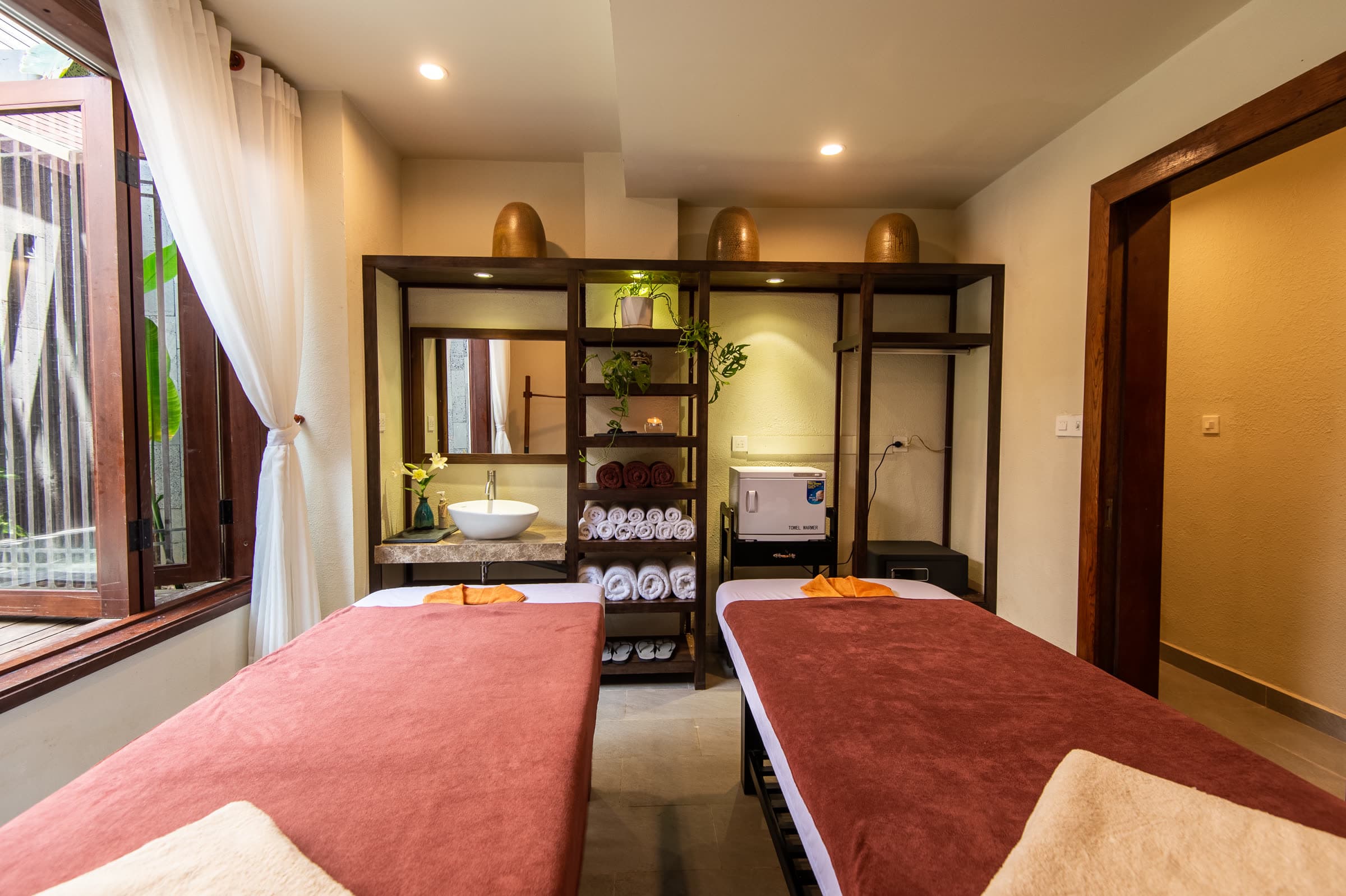
Every room at Nghê Prana is designed around the science of sleep. Blackout curtains, nightly aromatherapy turndown, and riverside quiet — experience what real rest feels like.
Riverside hotel rooms on the Thu Bồn, ten minutes by bicycle from the Ancient Town. Whether it's one night between Hue and Da Nang or a full week of doing nothing — we kept your room quiet.
Free cancellation · Direct from the family who built the hotel


 WhatsApp
 Zalo
Zalo